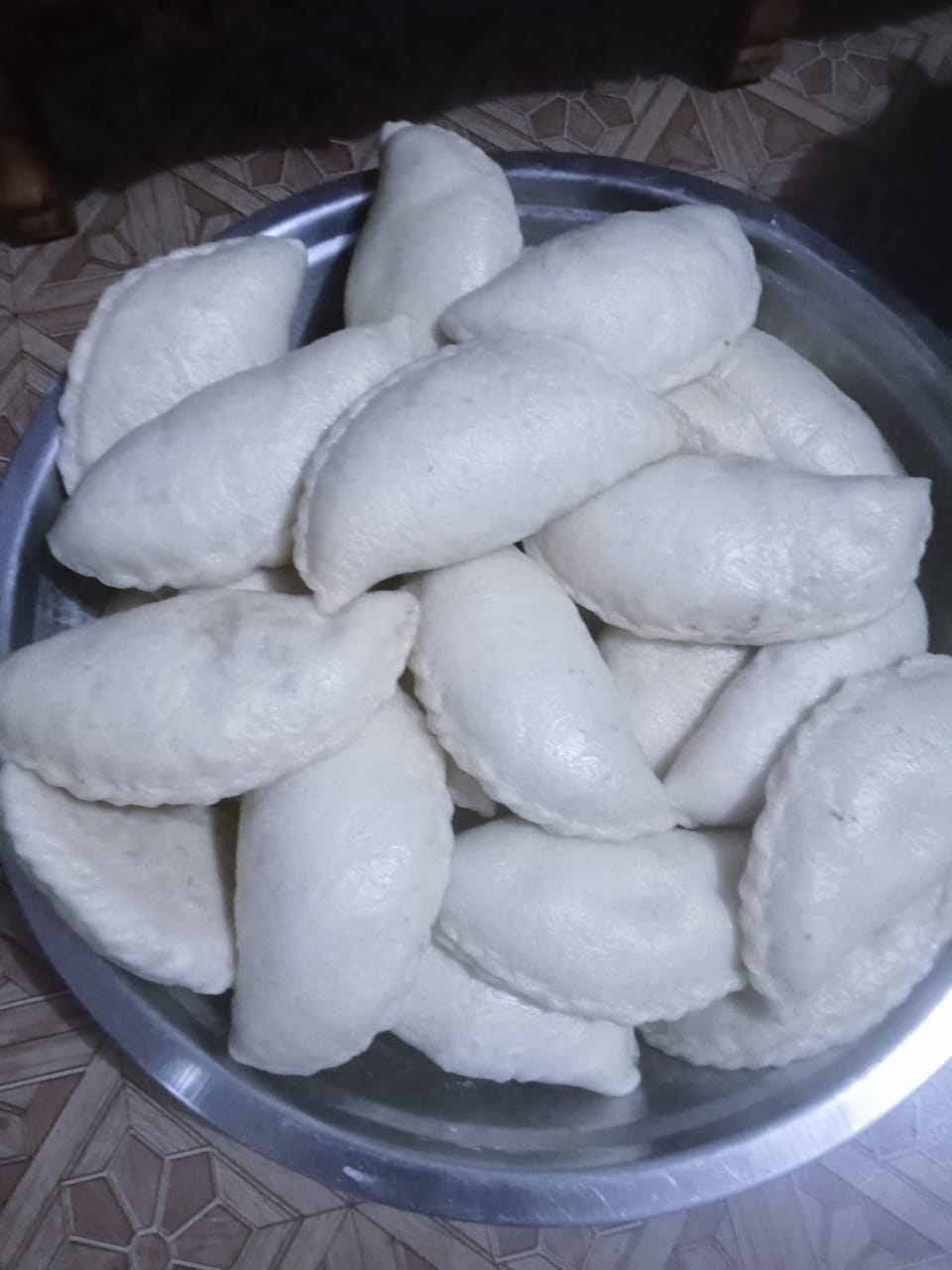
Ask someone from Kullu or Manali what Himachali food actually means, away from the trekker-café menus, and two dishes come up before anything else: siddu and dham. Neither is designed to be eaten quickly, and neither shows up much outside the state.
Siddu
Siddu is a steamed, leavened wheat bread, usually stuffed with a filling of ground walnuts, poppy seeds or minced meat, though a plain version exists too. The dough is proved for several hours before steaming, which gives it a dense, slightly chewy texture closer to a stuffed bao than to naan or roti. It’s traditionally served with a generous amount of ghee and a side of mint or walnut chutney, and it’s substantial enough that one is usually a full meal, not a snack.
Winter is siddu season — the walnut filling in particular is associated with the colder months in Kullu valley households, though most restaurants that serve it now do so year-round.
Dham
Dham is less a single dish than a full ceremonial meal, traditionally prepared by a botis (community cooks) for weddings and festivals and served on a leaf plate. A typical dham includes rice, rajma or black chana, madra (a yoghurt-based curry, often made with chickpeas or kidney beans), and a sweet rice dish called meetha to close the meal — all cooked without onion or garlic in most traditional versions, and almost entirely vegetarian regardless of the household’s usual diet.
Getting an authentic dham outside of an actual wedding or festival takes some looking — a handful of restaurants in Kullu and Mandi towns serve a version of it on a fixed schedule, usually announced locally rather than advertised to visitors.
Where to find them
Siddu is the easier of the two to find as a visitor — most local dhabas in Kullu, Manali and Naggar carry it, particularly in the colder months. Dham is worth asking about specifically at your homestay if you’re staying with a local family; a genuine invitation to a dham sitting is a better introduction to it than any restaurant version.
