Shimla 14°C, clear Manali 8°C, light snow above 2400m NH3 Chandigarh–Manali: open, no restrictions HP govt jobs: new postings this week Dharamshala 12°C, overcast Apple mandi rate, Shimla: ₹68–82/kg Shimla 14°C, clear Manali 8°C, light snow above 2400m NH3 Chandigarh–Manali: open, no restrictions HP govt jobs: new postings this week Dharamshala 12°C, overcast Apple mandi rate, Shimla: ₹68–82/kg

Category: News

  • Discover 10 Interesting Facts About Himachal Pradesh

    Discover 10 Interesting Facts About Himachal Pradesh

    1. Land of Gods and Temples

    Himachal Pradesh is home to numerous ancient temples and sacred sites, earning it the moniker “Land of Gods.” The state is dotted with temples dedicated to various deities, each with its own legends and rituals. The intricate architecture and spiritual aura of these temples attract pilgrims and tourists alike.

    2. Capital Without a Railway Station

    The capital city of Himachal Pradesh, Shimla, stands out as one of the few state capitals in India without a railway station. Instead, the Kalka-Shimla Railway, a UNESCO World Heritage Site, connects Shimla to Kalka in Haryana. This narrow-gauge railway is renowned for its stunning scenic views and engineering marvels.

    3. Himalayan Splendor

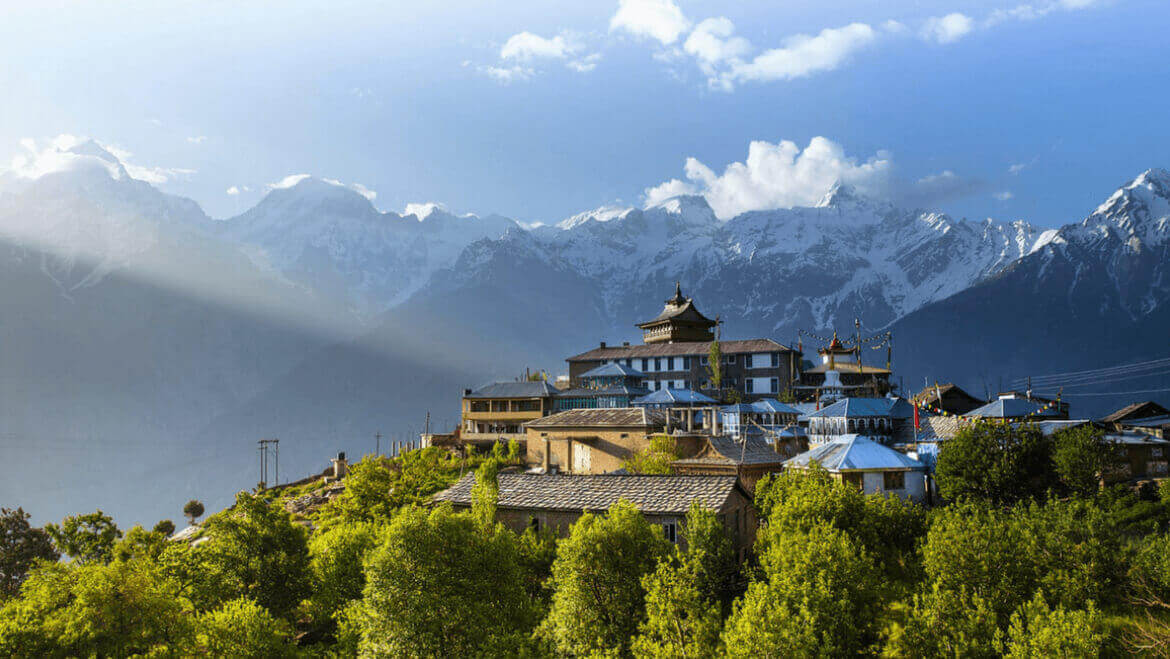
    Himachal Pradesh boasts a diverse geography that encompasses lush valleys, snow-capped peaks, and rugged mountain terrain. It is nestled in the western Himalayas and is characterized by its stunning landscapes, making it a haven for nature enthusiasts and adventure seekers.

    4. Apple State of India

    The state is often referred to as the “Apple State of India.” Himachal Pradesh is a major contributor to India’s apple production, accounting for a significant portion of the country’s total apple yield. The sight of sprawling apple orchards against the backdrop of mountains is a quintessential image of the state.

    5. Chail Cricket Ground – The Highest in the World

    Chail , a serene hill station in Himachal Pradesh, is home to the highest cricket ground in the world. Situated at an astonishing altitude of 2,444 meters above sea level, the Chail Cricket Ground offers a unique sporting experience amidst the Himalayan tranquility.

    6. Tibetan Exile Hub – Dharamshala

    Dharamshala, in the Kangra district, is not only a picturesque hill station but also a significant center for Tibetan culture and Buddhism. It serves as the headquarters for the Tibetan government-in-exile and is the residence of the 14th Dalai Lama. The blend of Tibetan and Indian influences creates a distinctive cultural tapestry.

    7. Oldest Legislative Assembly

    The Himachal Pradesh Legislative Assembly is one of the oldest in India. Established in 1952, it has a rich history of democratic governance. The state is often referred to as “Dev Bhoomi,” meaning “Land of the Gods,” which is a testament to its cultural and spiritual significance. Check out this amazing blog- https://himachal.blog/how-traveling-becomes-therapy/

    8. Abode of Wildlife

    Himachal Pradesh is not only renowned for its breathtaking natural beauty but also for its rich biodiversity. The state is home to several wildlife sanctuaries and national parks, including the Great Himalayan National Park, which is a UNESCO World Heritage Site. These protected areas harbor diverse flora and fauna, including rare and endangered species.

    9. Himachali Cuisine

    The culinary heritage of Himachal Pradesh is as diverse as its landscapes. Himachali cuisine is characterized by its hearty and flavorful dishes. From Chana Madra, a delectable chickpea curry, to Sidu, a steamed bread stuffed with spices, the cuisine offers a delightful exploration of local flavors. Dham, a traditional multi-course meal served during festivals, is a must-try for visitors.

    10. Festivals and Celebrations

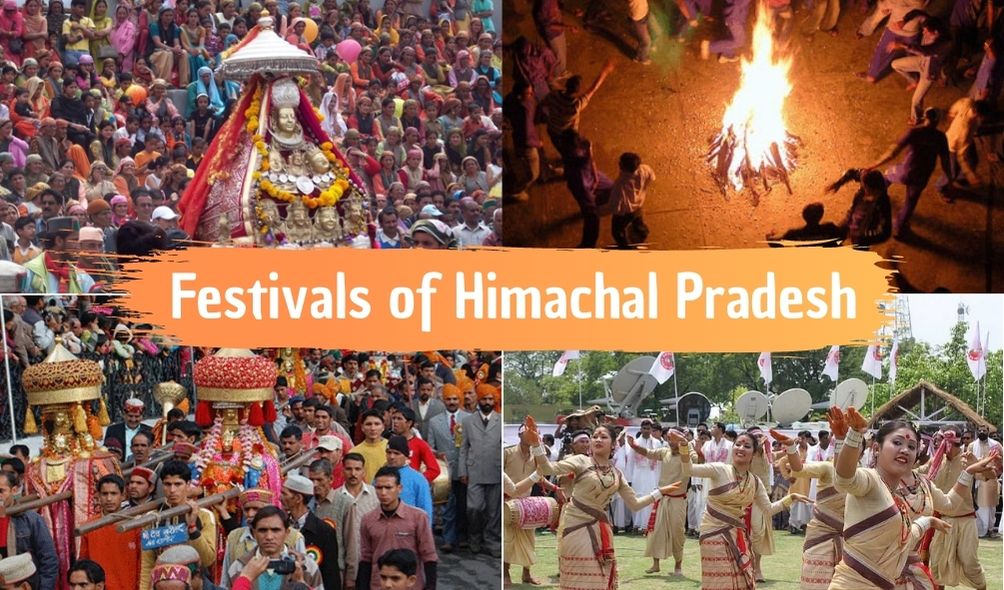
    Himachal Pradesh celebrates a multitude of festivals with great fervor and enthusiasm. The Dussehra festival in Kullu is renowned for its grand processions and cultural performances. The Minjar Fair in Chamba is a colorful extravaganza that marks the harvest season. Additionally, Losar, the Tibetan New Year celebrated in Dharamshala, showcases the vibrant Tibetan culture.

  • Enchanting Festivals of Himachal Pradesh

    Enchanting Festivals of Himachal Pradesh

    1. Dussehra – The Grandeur of Kullu Valley Dussehra in Himachal Pradesh isn’t just a festival; it’s an extravaganza of colors, music, and devotion. The Kullu Dussehra, celebrated in the Kullu Valley, is renowned across the country. The week-long festivities see larger-than-life accompanied by traditional music and dance. The air is filled with a sense of reverence and joy.

    2. Lohri – Welcoming Longer Days As the winter solstice passes, Himachalis come together to celebrate Lohri, a festival that marks the end of winter and the beginning of longer days. Bonfires are lit, and people gather around to sing traditional songs and dance to the beats of drums. The warmth of the fire reflects the unity and togetherness of the community.

    3. Baisakhi – A Harvest of Joy and Thankfulness Baisakhi, celebrated on April 13th or 14th, is a festival of gratitude for the bountiful harvest. In Himachal Pradesh, it holds special significance, especially in areas with a significant Sikh population. The day is marked with religious processions, langars (community feasts), and spirited performances of the bhangra dance.

    4. Phulaich – Festival Embracing Nature’s Beauty Unique to the Kinnaur region, the Phulaich Festival celebrates the beauty of nature and the bounty it bestows. The festival involves offering flowers to deities and seeking their blessings for a successful harvest. Amidst traditional songs, dances, and rituals, the people of Kinnaur pay homage to the earth’s generosity.

    5. Manimahesh Yatra – A Spiritual Trek For the spiritually inclined, the Manimahesh Yatra is a journey of devotion and self-discovery. Pilgrims undertake a trek to the sacred Manimahesh Lake, located at the base of Mount Kailash. The Yatra, usually held in August or September, is a test of faith and endurance, attracting pilgrims seeking blessings and spiritual enlightenment.

    6. Nalwari Fair – A Fusion of Culture and Commerce In the town of Bilaspur, the Nalwari Fair brings together culture, sports, and trade. Cattle trading is a significant part of this fair, and it’s a unique opportunity to witness the traditional way of commerce. Cultural performances, traditional sports, and local crafts add vibrancy to the event.

    7. Sazo Festival – Honoring Ancestral Spirits The Pangwal community celebrates the Sazo Festival as a way to show gratitude to their ancestors and deities. The festival involves rituals, dances, and prayers to seek blessings for a bountiful harvest and a prosperous life. You may also read this blog – https://himachal.blog/jibhi-where-natures-beauty-unfolds/

    8. Losar Festival – Radiate Joy and Culture This Tibetan New Year festival is celebrated by the Tibetan community in various parts of Himachal Pradesh, especially in Dharamshala and McLeod Ganj. It usually falls in February or March and involves colorful masked dances, rituals, and feasting.

    9. Fagli Festival – Spirit of Tradition Celebrated in Kinnaur district, Fagli is a unique festival where villagers playfully throw ‘Kinnauri Chilgoza’ (pine seeds) at each other. It usually falls in February.

    These are just a few of the many festivals celebrated in Himachal Pradesh. Each festival is unique in its traditions and significance, offering a glimpse into the vibrant and diverse culture of the state. As these festivals unfold throughout the year, they not only celebrate the state’s cultural heritage but also offer a window into the resilience, spirit, and unity of people.

  • Himachal Pradesh’s Wildlife Marvels: Conservation Initiatives Shaping the Future

    Himachal Pradesh’s Wildlife Marvels: Conservation Initiatives Shaping the Future

    1. Great Himalayan National Park: Located in the Kullu district, the Great Himalayan National Park (GHNP) is a UNESCO World Heritage Site known for its rich biodiversity. The park is home to numerous endangered and endemic species. Conservation measures in GHNP focus on habitat protection, anti-poaching efforts, and community involvement in conservation activities.

    2. Wildlife sanctuaries and reserves: Himachal Pradesh has several wildlife sanctuaries and reserves that serve as important habitats for a wide range of species. These protected areas, such as the Renuka Wildlife Sanctuary, Churdhar Wildlife Sanctuary , and Kalatop Khajjiar Wildlife Sanctuary. These sanctuaries contribute to the conservation of various animals, including the Himalayan black bear, serow, barking deer, and numerous bird species.

    3. Conservation of snow leopard: The state has established the Snow Leopard Project, which focuses on research, conservation, and community-based initiatives to protect this endangered species. Efforts include setting up camera traps to study snow leopard populations, engaging local communities in conservation activities, and implementing sustainable livestock management practices to minimize conflicts between snow leopards and herders.

    4. Ecotourism and sustainable living: Wildlife conservation initiatives in Himachal Pradesh often integrate ecotourism as a means to generate economic benefits while preserving natural resources.Also, Responsible tourism encourages travelers to be mindful of their impact and make choices that benefit both the environment and local communities. Ecotourism activities often involve guided tours, nature walks, and interpretive programs that raise awareness about the importance of wildlife conservation. Responsible tourism encourages travelers to be mindful of their impact and make choices that benefit both the environment and local communities. You may also read – https://himachal.blog/places-to-visit-in-kasol/

    5. Forest Conservation and Afforestation: Forests play a vital role in supporting wildlife populations and maintaining ecological balance. Himachal Pradesh has implemented various forest conservation programs, including afforestation drives, sustainable forest management practices, and anti-deforestation measures. These initiatives aim to protect forest ecosystems, enhance habitat connectivity, and promote the regeneration of degraded areas.

    6. Tirthan Wildlife Sanctuary -Tirthan Wildlife Sanctuary is located in the Kullu district of Himachal Pradesh, India. It is a protected area known for its rich biodiversity and scenic beauty and plays a significant role in the conservation of wildlife. Conservation efforts in Tirthan Wildlife Sanctuary focus on protecting and preserving the biodiversity of the area. Measures such as anti-poaching patrols, habitat restoration, and community participation are implemented to ensure the sustainable management of the sanctuary.

    7. Community-based Conservation: The involvement of local communities is crucial for effective wildlife conservation. Himachal Pradesh has implemented various community-based conservation initiatives where local communities actively participate in conservation activities. These initiatives include capacity building, awareness programs, and the establishment of community-managed conservation areas. By involving communities in conservation efforts, it promotes a sense of ownership and responsibility toward the protection of wildlife and their habitats.

    Overall these conservation initiatives in Himachal Pradesh are crucial for the long-term survival of wildlife species, the preservation of biodiversity, and the sustainable development of the region.By involving local communities, promoting responsible tourism practices, and addressing key conservation challenges, these initiatives are shaping a future where Himachal Pradesh’s Wildlife Marvels and natural ecosystems thrive in harmony with human activities.

  • Sukhvinder Singh Sukhu: New CM of Himachal Rise to Political Ramp

    Sukhvinder Singh Sukhu: New CM of Himachal Rise to Political Ramp

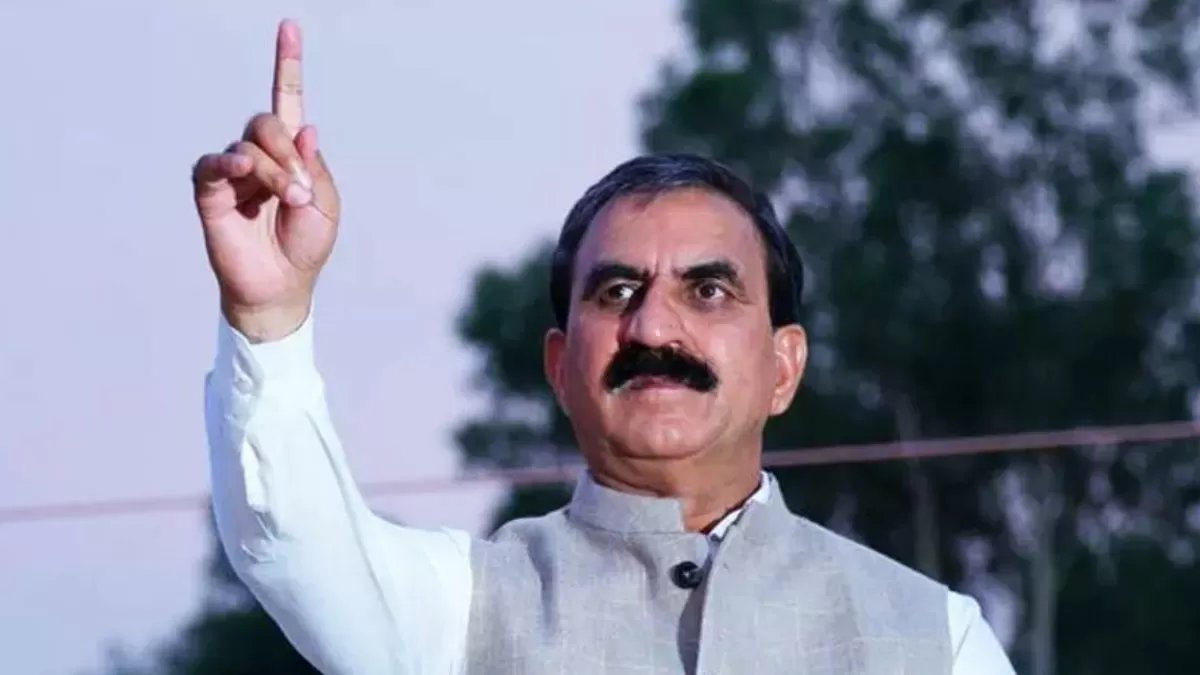
    On Saturday, the Congress high command officially appointed party chief Sukhvinder Singh Sukhu as the recent chief minister of Himachal Pradesh. Newly elected Congress MLAs assembled on Saturday evening for their second meeting in as many days as the party works to choose a majority candidate for the position of the chief minister. The Congress leadership appointed Sukhu, 58, as the chief executive officer on Saturday, two days after the party won 40 of the 68 seats in the Himachal Pradesh State Assembly. On Sunday at 1:30 pm, Sukhvinder Singh Sukhu, a former state president of the Congress, swore in his position as the 15th chief minister of Himachal Pradesh (December 11). During the campaign, Sukhu emphasised the need for employment creation, concentrating on filling open government positions and creating new private jobs. He also pledged to lead a government that is honest and transparent. He asserted that it was his duty to keep the promises made by the party to the public. “We want to accumulate power rather than merely hold it. We wish to alter the current system. To introduce a new system and new ideas, we must work hard and battle, he stated.

    An Overview: Sukhvinder Singh Sukhu

    Sukhvinder Singh Sukhu is an MLA for the Himachal Pradesh district of Nadaun. He pertains to the Indian National Congress political organization. Sukhu was born on March 27, 1964, in Sera village, Nadaun tehsil, Hamirpur district. His mother, Sansar Dei, is a housewife, while his father, Rashil Singh, worked as a driver for the Himachal Road Transport Corporation in Shimla.

    Observations Regarding Sukhu :-

  • Sukhwinder Singh Sukhu, a four-term legislator and the former head of the Himachal Pradesh Congress Committee, is seen as close to party chief Rahul Gandhi.
  • Sukhu, who belongs to Nadaun in the Himachal region of Hamirpur, connected with the National Student Union of India (NSUI), the party’s novice arm, during his college years.
  • Sukhu presided over the state Youth Congress as president from 1998 until 2008. In 2013, he was chosen to lead the Himachal Pradesh Congress committee.
  • He is a deputy for the Nadaun council seat in the 13th HP Legislative Assembly. Vijay Agnihotri succeeded him in 2017.
  • Sukhu had been one of the contenders for the position of chief minister in Himachal Pradesh after the Congress’ victory in Thursday’s assembly elections.
  • The Following Factors influenced Sukhvinder Sukhu’s Rise to the Top Post:

    Counting up first: Sukhvinder Sukhu has the assistance of greater than half of the 40 Congress MLAs in the House of 68. The Congress achieved four of the five seats in his home district of Hamirpur, the district of BJP Union Minister Anurag Thakur and his father, the experienced Prem Kumar Dhumal. The fifth seat went to a state legislator who had become a dissident. Self-made picture: His adversaries Pratibha Singh and Mukesh Agnihotri, the former news reporter of the late “Raja” Virbhadra Singh, and his wife, respectively, entered politics in the wake of him. They were against Mr Sukhu, an identity representation of a former student leader who had previously sold milk and whose father had been a bus driver. Mukesh Agnihotri, slated to become deputy chief minister, Pratibha, now in charge of the state unit, and Vikramaditya, who may also be given a senior post, give the rivals something to balance things out. Accustomed to Shimla: When compared to the upper hills and the capital Shimla, where the Virbhadra Singh clan draws strength from its former regal status, Sukhvinder Sukhu’s Hamirpur district is a completely different area. However, Mr Sukhu is not new to Shimla; he participated in student politics there and later won municipal elections before transitioning to state-level politics & relocating to his hometown of Hamirpur. Ascend the ranks: He has worked for the party in Himachal for almost four decades at almost all levels. Rising through the National Student Union of India (NSUI) ranks, Youth Congress, and state unit leader. He asserted his right to the top position and was open about his hostility toward the late Virbhadra Singh. Because of his leadership approach, he stood out among other figures who silently followed the “Raja” of Rampur-Bushahr. Obstinate brand: Since his days in the fiercely contested Himachal Pradesh University elections, Sukhvinder Sukhu has owned the term “firebrand,” frequently used to describe him. But, except for a clue, last night, when asked about Pratibha Singh’s fans shouting slogans, the lawyer by training has made no news-making remarks since the victory. Instead, he said, “Slogans don’t make someone chief minister.” You can also read – https://himachal.blog/raja-virbhadra-singh-the-king-of-himachal-pradesh/

  • Raja Virbhadra Singh | The ‘King’ Of Himachal Pradesh’s Heart

    Raja Virbhadra Singh | The ‘King’ Of Himachal Pradesh’s Heart

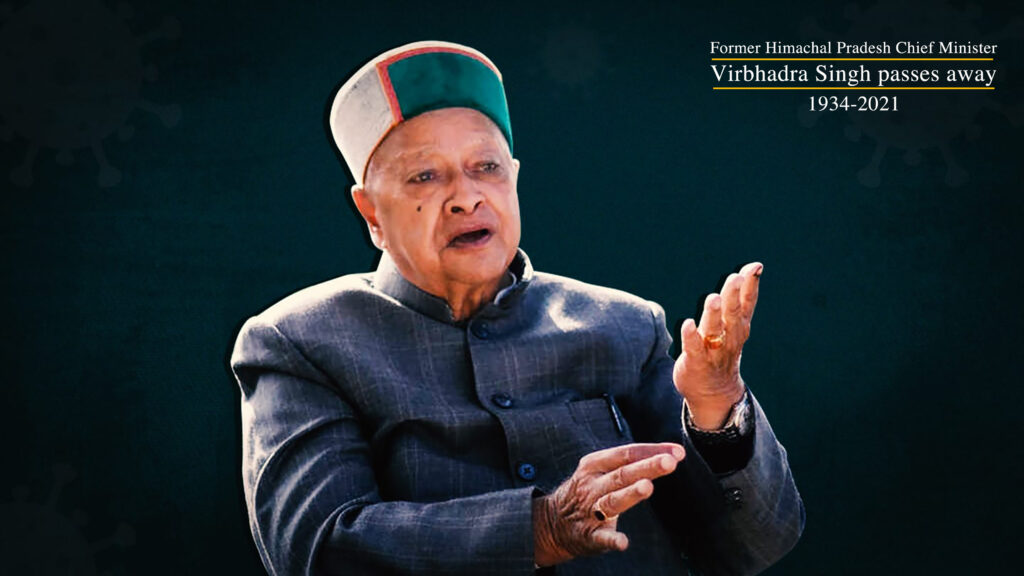
    “My strength comes from you all, my people. The warmth, support, and trust you show me and your heartfelt love for me are the only things that give me strength. I make an effort to give it back for the growth and well-being of everyone in Himachal Pradesh. We Paharis understand how to live a life of self-worth. We dislike being bullied.” These are a few of the six-time chief minister of Himachal Pradesh’s catchphrases. Raja Virbhadra Singh’s eyes used to frequently fill with tears when he expressed his devotion to others.

    All About Raja Virbhadra Singh

    Virbhadra Singh, better known as “Raja Sahib in Himachal Pradesh,” was an Indian politician who was born on June 23, 1934. He served as the state’s chief minister for the longest period of time. A compassionate man who was also a very astute politician, Singh was known as the “king” of Himachal Pradesh and is remembered for his political triumphs. He was known for taking on his adversaries even when he had his back to them. Singh’s mortality signifies the end of an era for the Congress in the northern hill state of Himachal Pradesh as well as for the state itself. Virbhadra Singh, better known as “Raja Sahib in Himachal Pradesh ,” was an Indian politician who was born on June 23, 1934. He served as the state’s chief minister for the longest period of time. Virbhadra was chosen by Jawaharlal Nehru to stand for the Lok Sabha in 1962 , and he afterwards served in both the Parliament and the Himachal Legislative Assembly on numerous occasions. Throughout the process, he gained a huge amount of experience and absorbed the best traits from Prime Ministers and politicians from many eras and generations. Between 2012 until 2017, Virbhadra served as Chief Minister. In December 2017, the BJP’s Jai Ram Thakur succeeded him. He served as Himachal Pradesh’s Chief Minister from 1983-90, 1993-98, 2003-2007, and 2012-2017.

    Virbhadra Singh’s birth and early years

    At Sarahan in the Shimla district, Raja Virbhadra Singh was born into the royal dynasty of the Bushahr princely state. In May 1954, Ratna Kumari and Virbhadra got married. His daughter Abhilasha, a former judge, worked in Gujarat’s High Court from 2006 to 2018. Virbhadra married Pratibha Singh as his second marriage in 1986. In 2004, his second wife campaigned for and won a seat in the Lok Sabha representing Mandi.

    Virbhadra Singh Education

    Following his schooling at the Bishop Cotton School Shimla VBGSSS Arhal (Rohru ), St. Edward’s School Shimla, and Colonel Brown Cambridge School Dehradun, Virbhadra Singh earned a BA with honors from St. Stephen’s College Delhi.

    Career in Politics of Virbhadra Singh

  • In addition to state politics, Virbhadra Singh has significantly influenced national politics. The 1962 Indian general elections resulted in Virbhadra Singh winning a seat in the Lok Sabha.
  • In 1967 and 1971, he triumphed once more. In 1983, after winning the seat in the Jubbal Kotkhai constituency, he was elected as the first Chief Minister of Himachal Pradesh.
  • The Chief Minister of Himachal Pradesh with the longest tenure is Raja Virbhadra Singh. He was subsequently reappointed as Chief Minister in 1993 and again from 2003 -12.
  • In the elections of November 2012, Virbhadra Singh was chosen to lead the Congress party in the state. He performed admirably. From February 1992 to September 1994, he served as the Himachal Pradesh Congress Committee’s president.
  • In 1976, Virbhadra Singh was a representative of India in the United Nations (UN) General Assembly. The 2017 assembly elections were lost by his party.
  • You may also read – https://himachal.blog/the-great-himalayan-national-park-manali/

    Raja Virbhadra Singh Accomplishments

  • National Award for Agricultural Marketing Excellence
  • Silver Elephant will assist the Movement of Scouts and Guides.
  • The London-based Institute of Directors bestows the Golden Peacock Environment
  • Leadership Award in recognition of recipients’ contributions to environmental governance, eco-tourism, and environmental protection.
  • Himachal Pradesh Mukhyamantri Swavalamban Yojana Tremendous Facts

    Himachal Pradesh Mukhyamantri Swavalamban Yojana Tremendous Facts

    Mukhyamantri Swavalamban Yojana Scheme Details

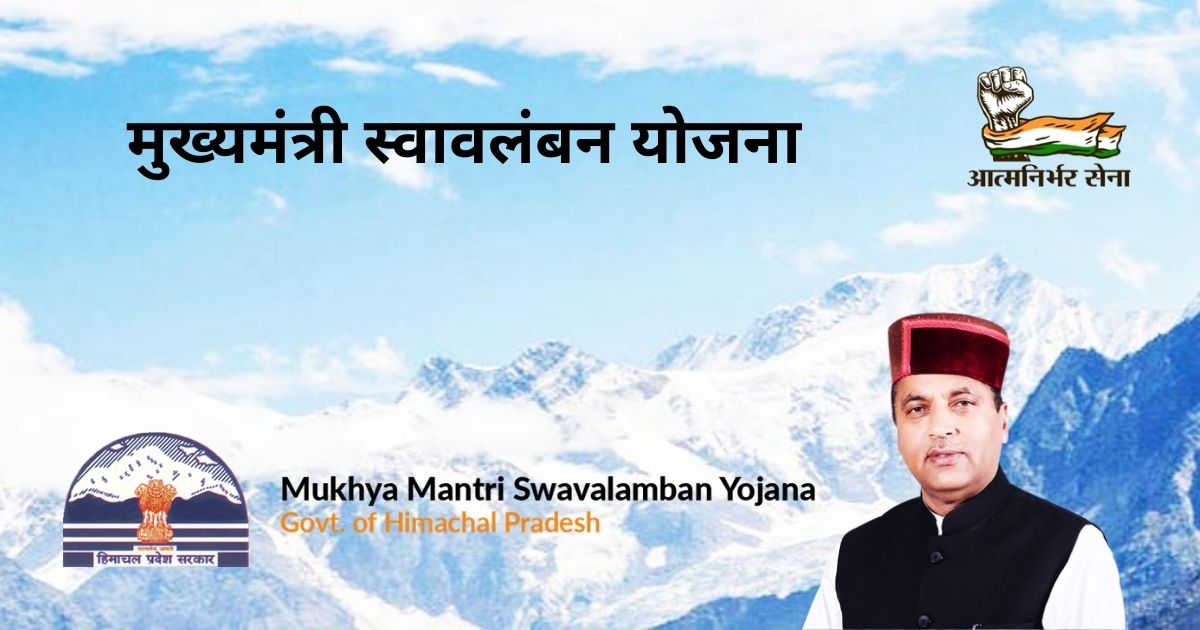
    In Himachal Pradesh, 35 projects have been launched under this programme. The project has already incurred Rs. 7.33 crore ; this year, another Rs. 7.50 crore is set aside for it. In addition, disseminating details about the programme to all state residents has been mandated for people to become aware of it, start their businesses, and get back on their feet. Through the Mukhyamantri Swavalamban Scheme, citizens can start their businesses. Under this, the state government would provide loan subsidies to applicants seeking to develop (build) businesses in the services industry. Citizens will receive a 25%–35% subsidy. A 5% discount will also be offered under the programme on the citizen’s 3-year, Rs. 40 lakh loan. The applicant will receive land at a discount if his business venture is up to 60 lakhs . The applicant must repay this loan within five to seven years. The applicant won’t need to visit the office repeatedly to apply for the scheme. He can quickly apply for the programme online using a computer or mobile device, saving him time and money. You should also read – https://himachal.blog/himachal-pradesh-labor-schemes/

    Objectives of Mukhyamantri Swavalamban Yojana

    By offering jobs to all inhabitants, the Swavalamban scheme’s primary goal is to end unemployment in the nation and improve its economic situation. The state and federal governments make every effort to offer citizens jobs to prevent them from difficulties. Through the curriculum, the government would give loans to citizens who wish to start their businesses but lack the funds or are in poor financial standing, as well as a fixed subsidy on the loans to help them out financially & allow them to do so. You can begin producing employment.

    Features and Advantages of the Scheme

    Please read the provided points in their entirety to learn about the features and advantages of the Swavalamban Scheme.

    How to Complete an Online Application for the Himachal Pradesh Mukhyamantri Swavalamban Yojana 2022?

    You must be familiar with the application procedure if you intend to apply for the Himachal Pradesh Mukhyamantri Swavalamban Yojana 2022. You will receive details about the scheme’s application procedure from us. Follow our steps to learn the basics for applicants.

  • The applicant must first visit the Mukhyamantri Swavalamban Yojana website. https://mmsy.hp.gov.in/
  • You can apply online for the Mukhyamantri Swavalamban Yojana by clicking on login on the right hand side of the home pagehttps://mmsy.hp.gov.in/login
  • Clicking will cause the login form to pop up in front of you.
  • The Login form necessitates you to enter your email address or mobile number, password/OTP & captcha.
  • Click the Sign In button once you have completed the form.
  • You’ll see the application form once you are logged in .
  • You must complete the application form’s information requests.
  • You must press the submit button after entering the information.
  • The application process will be finished once you click.

  • Subsidy Granted Through the Scheme on Bank Loans

    Important Links –

    Notification – https://emerginghimachal.hp.gov.in/themes/backend/uploads/notification/mmsy/MMSY-as-on-20-04-2022.pdf Guidelines – https://emerginghimachal.hp.gov.in/themes/backend/uploads/notification/Notification/Operational-Guidelines-for-Mukhya-Mantri-Swawlamban-Yojna-2019.pdf

  • List of Cities in Himachal Pradesh by Population

    List of Cities in Himachal Pradesh by Population

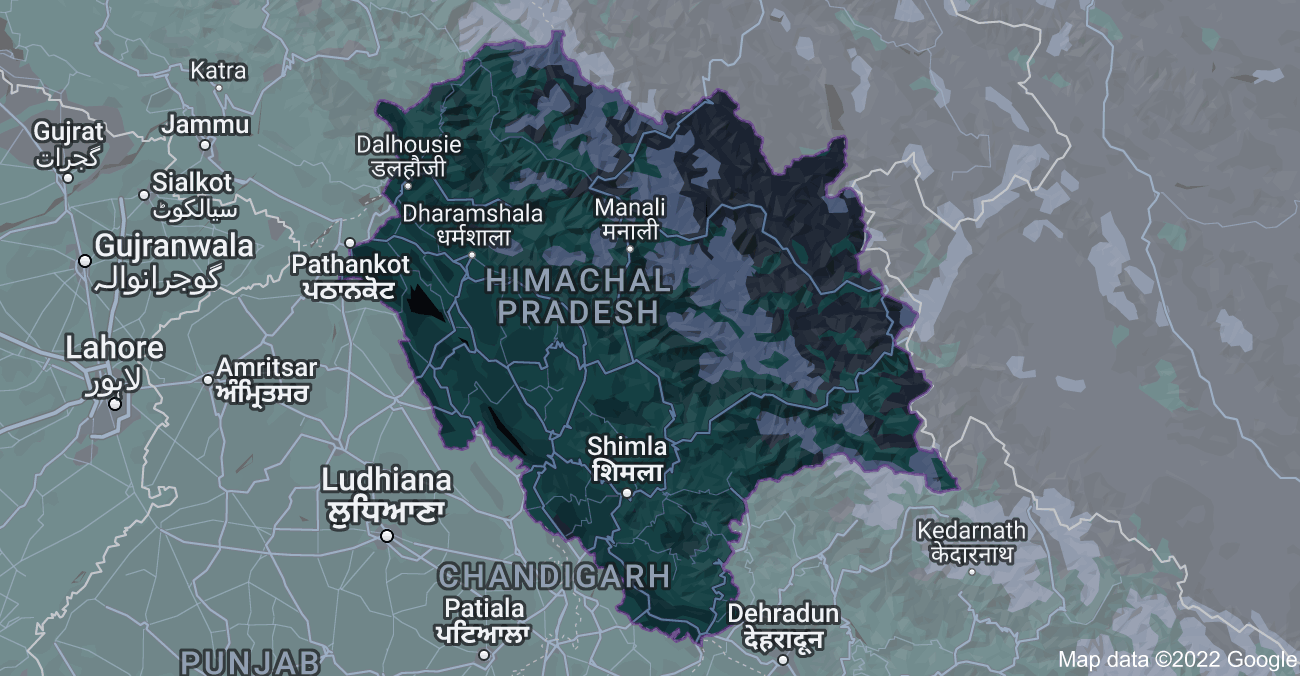
    The charming appeal of the cities of Himachal Pradesh is the one thing that unites them all. Himachal Pradesh’s tourist attractions live up to terms that include “pristine,” “beautiful,” “celestial,” “ethereal,” and “extremely enticing.” Shimla , Kullu, Manali, Dalhousie, and Dharamsala are a few of Himachal Pradesh’s most well-known cities. Most visitors travel to these hill towns during the summer, partly to escape the heat and more to take in their enchanting beauty. A pleasant vacation from the oppressive heat is provided by the mild climate of the Himachal cities. Likewise, they are easily reachable because they are well connected to many regions across the country. So come, let’s check on the top 10 cities of Himachal Pradesh by population. This is a tilt of urban agglomerations, cities, and towns from the Himachal Pradesh state of India as of the 2011 census. Let’s start with the most populated city and follow further.

    1. Shimla

    Population: 169,578 The capital and largest city of the Indian state of Himachal Pradesh is Shimla, commonly known as Simla, which was used officially until 1972. Shimla was designated as British India’s summer capital in 1864. Following independence, the city was named East Punjab’s capital and then Himachal Pradesh. It serves as the state’s main hub for commerce, culture, and education. What is Shimla famous for? The town is prominent for offering enjoyable hillside walks surrounded by pine and oak woodlands. The Mall, Ridge, and Toy Train are well-known landmarks in this Himachal Pradesh capital city. The town has buildings in the colonial style, which give it a unique appearance. Famous fact: The only natural ice skating rink in the country is Shimla. It was established in 1920 under British administration and has been a well-liked travel attraction in Shimla.

    2. Dharamshala

    Population : 53,543 The winter capital of Himachal Pradesh, India, is Dharamshala. After being moved from Kangra, a city 18 km from Dharamshala, in 1855, it now serves as the administrative center of the Kangra district. Dharamshala gives the appearance that one has traveled to a place where Tibetans live. However, the earth and the soul are incredibly friendly. As the residence of the Dalai Lama and all exiled Tibetans, Dharamshala, located in the Western Himachal region, is well-known among Buddhist visitors to the state. What is Dharamshala famous for? The place is well known for its breathtaking landscapes, and because of the vast number of Tibetan communities there, it is also known as “Little Lhasa. ” Famous fact: The city is home to peculiar cafes, untamed waterfalls, treks, trails, and camping grounds, in addition to monasteries and spectacular temples. Doesn’t it sound alluring? But, of course, if you’re an Indian, you won’t have to travel very far to see this (at least if you’re in Dharamshala, Himachal Pradesh).

    3. Solan (Education Hub of Himachal )

    Population: 47,418 The administrative hub of the Solan district is the city of Solan, which is situated in the Indian state of Himachal Pradesh. The state capital Shimla is 45.5 km away from this township. Solan is located at an average elevation of 1,550 meters above sea level. The town is located halfway between Chandigarh and Shimla on National Highway 5 between Kalka and Shimla. What is Solan famous for? Since Solan produces the most mushrooms in India and is home to the Directorate of Mushroom Research, it is referred to as the “mushroom city of India .” The city’s name comes from a Hindu goddess, Shoolini Devi, who is revered there. Famous fact: Mount Karol, which rises to 2280 meters, is the highest peak in Solan . There is a historical Pandava cave at the mountain’s peak where the Pandavas formerly meditated.

    4. Mandi Fashion Capital of HP

    Population: 41,348 Mandi is a considerable city and urban municipality in the Himachal Pradesh state of India. This Himalayan mountain resort is 145 km from Shimla, the state capital, and experiences beautiful summers and chilly winters. Almost 220 km long, National Highway 20 connects Mandi to Pathankot, while 323 km long National Highway 21 connects Mandi to Chandigarh and Manali. What is Mandi famous for? Mandi is also known as “Choti Kashi” because the Ghats on the Beas River’s bank resemble those in Varanasi and because there are Lord Shiva temples nearby. It is frequently referred to as the cultural capital of Himachal Pradesh because of its rich culture, traditions, and temple architecture. Famous fact: Lord Shiva, the primary god of the Bhootnath, Trilokinath, and Panchvaktra temples, has designated Mandi as Cotopaxi Kashi. Mandi is one of the state’s cultural centers thanks to its ancient palace, magnificent temple architecture, and rich customs.

    5. Palampur

    Population: 40,385 In the Kangra District of the Indian state of Himachal Pradesh, Palampur is a hill town and a municipal corporation. The Dhauladhar hills flank it, and pine trees encircle it. Numerous streams originate in Palampur and flow from the mountains to the plains. Palampur has a unique appearance due to the presence of water, snow-covered mountains, and flora. What is Palampur famous for? The main reason for the tourist influx in this area is the Palampur Tea Gardens. Tea gardens cover a vast region and provide a unique touch to the landscape’s charm. In addition, Palampur is known as the “Tea Capital of Northwestern India ” and is the source of the renowned “Kangra Tea. ” Famous fact: Contrary to popular belief, the state does not exclusively have tea gardens. Palampur is a heritage site with amazing architecture and natural beauty. This area is the ideal blend of vegetation and water, with a breathtaking perspective of the valley. Captain Vikram Batra was also belongs to Palampur. He is often termed the ‘Kargil War Hero”. Captain Batra was awarded the highest bravery honour, the Param Vir Chakra, for his heroic sacrifice

    6. Baddi (Industrial Hub of HP )

    Population: 29,911 Baddi is a town in the Shivalik Hills, 35 km west of Solan, in the Himachal Pradesh region of India. It is located on the boundary between Himachal Pradesh and Haryana states. What is Baddi famous for? Several pharmaceutical businesses operate manufacturing facilities and R&D centers in the municipality of Baddi . They include Cipla, Dr Reddy’s Laboratories, Cadila Healthcare, Torrent Pharmaceuticals, Abbott Laboratories, Ranbaxy Laboratories, and Manjushree Technopack, some of the biggest pharmaceutical corporations in the world. Famous fact: Leading FMCG, textile, and pharmaceutical businesses are housed in Baddi’s 3,120 facilities, which produce a combined Rs 60,000 crore in sales annually. The town earns half of the state’s entire industry revenue.

    7. Nahan

    Population: 28,899 Nahan is a town in northwest India’s Himachal Pradesh state. At the base of the Siwalik (Shiwalik) Range, it is located south-southeast of Shimla, the state capital. Trade in agricultural products and wood is centered on Nahan. The town’s industries are iron making, wood carving, and hand weaving. During British control in India, it served as the Sirmur (Sirmaur) Punjab Hill State seat. What is Nahan famous for? History lovers will enjoy the scenic beauty of Nahan and the legends and tales surrounding it. In Nahan, numerous tourist attractions appeal to visitors of all ages, such as Shivji Temple, Triloknath Cave Temple, and Kalisthan Temple. Famous fact: At the height of 932 meters, Nahan is a great starting point from which to explore the nearby Renuka Lake , Paonta Sahib, Trilokpur , and Suketi Fossil Park. There are temples and gardens there as well as a water-supplying artificial lake. As a result, Nahan has acquired the title of India’s second Municipal Corporation after Kolkata.

    8. Paonta Sahib –

    Population: 25,183 India’s Himachal Pradesh region includes the industrial town of Paonta Sahib. It is situated on National Highway 72, south of the Sirmaur district ( New NH 7). Sikhs consider Paonta Sahib a significant location of devotion since it is home to the massive Gurudwara Paonta Sahib on the Yamuna River’s banks. Between the states of Himachal Pradesh and Uttarakhand is a river. What is Paonta Sahib famous for ? Paonta Sahib, in the Himachal Pradesh district of Sirmour, is well known for its legendary Gurudwara. The tenth guru of the Sikhs, Guru Gobind Singh Ji, is commemorated by this Gurdwara. Guru Gobind Singh Ji wrote the Dasam Granth in this place. Famous fact: Guru Gobind Singh Ji and his horse are believed to have stopped here, where he then decided to stay. For nearly five years, he called this place home.

    9. Sundarnagar

    Population : 24,344 The Mandi District includes Sundernagar. It has a lake because of the waters of the Beas-Sutlej Project. Other sites on the surrounding hill include the Mahamaya Temple and Sukhdev Vatika. Sundernagar is a lovely town well-known for its shady strolls through imposing trees. What is Sundarnagar famous for? The Mahamaya Temple is the most famous of the town’s well-known temples. Sundernagar , located at an elevation of 1,174 meters, is renowned for its shaded paths through tall trees. Famous fact : The former capital of the princely kingdom known as Suket State was Sunder Nagar.

    10. Chamba

    Population: 19,933 The Chamba District, with an area of approximately 6522 square km and encircled on all sides by towering hill ranges, is located between north latitude 32° 11′ 30″ and 33° 13′ 6″ and east longitude 75°49″ and 77° 3′ 30″. The region is entirely mountainous, with elevations between 2,000 and 21,000 feet. What is Chamba famous for? The pristine natural beauty of Chamba , the home of Kailash Mountain and Lord Shiva, is well known. It’s a minor but incredibly alluring tourist attraction in Himachal Pradesh, recognized for its breathtaking natural beauty. Famous fact: A naturally formed Shiva Ligam with a copper covering that was taken from former Chamba copper mines is housed in the village’s 1100-year-old Chandrashekhar Temple. It is thought that Lord Shiva traveled from Saho to Manimahesh Kailash Peak in Bharmour to establish himself there.
  • List of Chief Ministers of Himachal Pradesh

    List of Chief Ministers of Himachal Pradesh

    Chief Ministers of Himachal Pradesh

    Do you know who the Chief Minister of Himachal Pradesh is? If not, do not worry. We have brought together a tilt of all the past and present chief ministers of Himachal Pradesh. Let’s get started.

    1. Yashwant Singh Parmar Former CM

    Political figure Yashwant Singh Parmar served as the state of Himachal Pradesh’s first Chief Minister and was a prominent member of the Indian National Congress. He was born into a Rajput family in the village of Chanhalag, close to Bagthan, in the formerly princely state of Sirmour. He attended Christian College in Lahore for his undergraduate studies before earning his PhD from Lucknow University in 1944. He represented Himachal Pradesh in the constituent assembly when it was constituted in 1946 when India became a republic. Working years: 1952-56, 1963-71, 1971-77 Leading Party: Indian National Congress Facts –

  • Dr Y.S. Parmar was the first to take pride in referring to himself as a “Pahadi,” which gave the rest of us a unique identity in which we now take great pride.
  • In Suket State, he organised a Satyagraha Movement that eventually led to the establishment of Himachal Pradesh in 1948.
  • He loved the traditional Pahadi cuisine, attire, & way of life in the hillsides.
  • He even wrote & published a book titled “The Social and Economic Background of Himalayan Polyandry,” which at the same time earned honor and criticism.
  • 2. Thakur Ram Lal

    From the Jubbal Kotkhai constituency, Thakur Ram Lal was elected to the Himachal Pradesh Vidhan Sabha in 1957. He then won the nomination from the same constituency in 1962, 1967, 1977, 1980, and 1982. On January 28, 1977, he was named the second Chief Minister of Himachal Pradesh. He served as the Himachal Pradesh Vidhan Sabha’s opposition leader. On February 14, 1980, he was named the state’s Chief Minister once more. Later, he retained the position of Andhra Pradesh Governor. He appointed Baskar Rao, Andhrapradesh’s finance minister as chief Minister. While the state’s current CM, Sri N.T. Rama Rao, undergoing surgery in the US, established his reputation as a notorious figure. Ram Lal has been decisively elected nine times from the Jubbal Kotkhai constituency to the Vidhan Sabha since 1957. He was appointed to the state assembly in 1977 despite the worst anti-congress wave ever, earning 60.2% of the total votes. Working years: 1977, 1980-83 Leading Party: Indian National Congress Facts:

  • He has kept up with sports, six times representing the state in the national Kabaddi competition and serving as its Captain three times.
  • He served as the Central Students’ Association’s General Secretary at Himachal Pradesh University.
  • In 1971, he was chosen as the best cadet from Punjab, Haryana, Chandigarh, and Himachal Pradesh as well as the strongest National Cadet Corps cadet on an All India level.

    3. Shanta Kumar

    Jagannath Sharma and Kaushalya Devi gave birth to Shanta Kumar in Garh Jamula, Kangra district, Himachal Pradesh. He graduated from Delhi Law College with an LL.B and Panjab University with a B.A. in arts. He began political work when he was elected as a Panch in the Gram Panchayat for Garhjamula in 1963. He was later selected to assist as a Panchayat Samiti member in Bhawarna and the Kangra Zilla Parishad president. Former Himachal Pradesh’s third chief minister, current Lok Sabha member, and former Union Minister of Government of India is Shanta Kumar. He is a part of the Bharatiya Janata Party and served in the government of Atal Bihari Vajpayee as the most senior Minister. Working years: 1977-80, 1990-92 Leading Party: Bharatiya Janata Party Facts:

  • The Vivekananda Medical Research Trust in Palampur, Himachal Pradesh, was led by him.
  • He specializes in a lot of constructive and literary activities, including writing.
  • During his second term as chief minister, he implemented the “No Work, No Pay” policy to deal firmly with the government employees on work stoppage.
  • Books Written by Shanta Kumar –
  • Dharti Balidan Ki, 1962
  • Himalaya Par Lal Chhaya, 1964
  • Vishwa Vijeta Vivekanand, 1968
  • Lajo, 1976
  • Man Ke Meet, 1976
  • Kaidi, 1976
  • Jyotirmayi, 1977
  • O Pravasi Meet Mere, 1977
  • Mrigtrishna, 1980
  • Kranti Abhi Adhoori Hai, 1985
  • Deewar Ke Us Paar, 1995
  • Rajneeti Ki Shatranj, 1997
  • Tumhare Pyar Ki Pati, 1999
  • Vrinda, 2007
  • A Patriot monk Swami Vivekananda, 2012
  • 4. Virbhadra Singh

    A politician from India named Virbhadra Singh was the fourth Chief Minister of Himachal Pradesh for six terms and 21 years. He was the chief of the Indian National Congress party. He was elected nine times to the Himachal Pradesh Vidhan Sabha as a member of the legislative assembly and five times to the Lok Sabha as a member of parliament. Virbhadra Singh was more commonly referred to as Raja Sahib. Singh has served as Himachal Pradesh’s Chief Minister for the longest. Singh studied at Bishop Cotton School, St. Edward’s School, and Colonel Brown Cambridge School in Shimla, Dehradun, then earned a B.A. Honors from St. Stephen’s College, Delhi. Working years: 1983-90, 1993-98, 2003-07, 2012-17 Leading Party: Indian National Congress Facts:

  • In the Indian Army, he held the honorary rank of Captain.
  • He is also known as king (Raja) and has been a worship figure by people of upper Himachal area.
  • By the London-based Institute of Directors for Contribution in Promoting Environment, Wild Life, Environment Governance and Eco-Tourism, he received the Silver Elephant Award for Contribution to the Scouts and Guides Movement and the Golden Peacock Environment Leadership Award.
  • 5. Prem Kumar Dhumal

    Prem Kumar Dhumal, born on April 10 1944 was the Bharatiya Janata Party’s Chief Ministerial candidate. Following his schooling at Guru Nanak Dev University in Amritsar and Doaba College in Jalandhar, he holds degrees in M.A. (Eng) and LL.B. He was recruited as a lecturer at a Punjabi private college. Working years: 1998-2003, 2007-12 Leading Party: Bharatiya Janata Party Facts:

  • He has authored numerous essays on politics, culture, sports, and other national problems, occasionally appearing in top newspapers.
  • He has also served as the college literary society’s general secretary and the campus magazine editor
  • 6. Jai Ram Thakur

    Political figure Jai Ram Thakur , born on January 6, 1965, is now the Chief Minister of the Indian state of Himachal Pradesh. He has been appointed to the Himachal Pradesh Assembly five times and has won every election since 1998. He formerly worked as a cabinet minister for the Himachal Pradesh BJP government. During his graduation from Vallabh Govt. College Mandi, he was introduced to the ABVP. He won his first election while running under the ABVP’s flag, which marked the start of a prolonged affiliation with the organisation. Working year: Current chief Minister 2017 Leading Party: Bharatiya Janata Party Facts:

  • He is a cheerful social worker because he occasionally plans blood donation camps. Being the Chairman of the General Development Committee and the Educational Committee, Vice-Chairman of the State Civil Supplies Corporation Limited, Chairman of the Rural Planning Committee, as well as the Minister for Panchayati Raj and Rural Development, he is regarded as one of the most dedicated and diligent politicians in Himachal Pradesh.
  • He is the 14th Chief Minister of Himachal Pradesh and the first Chief Minister from Mandi.
  • He has served five terms as an MLA in the Himachal Pradesh Assembly.
  • From 2007 until 2012, he served as both the rural development and panchayati raj minister.
  • These were Himachal Pradesh’s former and present chief ministers. We hope you found this information helpful. Keep checking back for more stuff like this. Keep learning and growing your knowledge up until then! Please do share and subscribe us.