Shimla 14°C, clear Manali 8°C, light snow above 2400m NH3 Chandigarh–Manali: open, no restrictions HP govt jobs: new postings this week Dharamshala 12°C, overcast Apple mandi rate, Shimla: ₹68–82/kg Shimla 14°C, clear Manali 8°C, light snow above 2400m NH3 Chandigarh–Manali: open, no restrictions HP govt jobs: new postings this week Dharamshala 12°C, overcast Apple mandi rate, Shimla: ₹68–82/kg

Category: Travel

  • Churdhar Trek: A Stunning and Remarkable Himalayan Trek

    Churdhar Trek: A Stunning and Remarkable Himalayan Trek

    The Churdhar Trek in Himachal Pradesh brings you to the Churdhar Top, named after ShriChureshwar or ShirgulMaharaj. He was thought to have lived here in ancient times. The peak is also known as Churi-Chandni-Dhar. Due to its connection to “ShriChureshwarMaharaj,” Churdhar is revered as holy and home to many temples.

    The iconic Himalayan peaks, including Kinner Kailash, Shrikhand Mahadev, Kedarnath, and Badrinath, are visible from the top. This journey, snaking through numerous landscapes, is a treat for its travelers. The initial half of the trip is up a steep slope, and the last four hours are through rainy weather. However, the most impressive part of this trek is, without a doubt, the Churdhaar nature refuge. Beautiful wildlife like the Himalayan Black Bear, Musk deer Lanhur, and other species pose a threat to this refuge.

  • Discover Churdhar peak’s greatest attributes.
  • Discover Churdhar Wildlife Sanctuary’s magnificence.
  • First, learn about the significance of the local mythology surrounding this destination.
  • Then, see the far-off peaks visible from the top in a panoramic picture.
  • The Scheduling

    In essence, you will reach three peaks:

  • 2,175 m Nauradhar
  • 2,855m Jam Nallah
  • 3,655 m Churdhar
  • One of the following routes will bring you to Nauradhar, where you will spend the night at the base camp before beginning the hike.

    Day 1:

    Your trip from Nauradhar to Jam Nallah will begin at 6 am. You should wear appropriate trekking shoes because the trail is rocky and hilly. Reaching the peak will take you three to four hours. There, you can find a few dhabas and shops where you can buy food and other necessities.

    Then, you will walk from Jam Nallah to Teesri, which is very simple with a well-defined track and takes you about 2 hours to finish. Along the way, you will see various lovely water streams.

    Day 2:

    Day 2 of the walk will take you from Teesri to Churdhar, which is the hardest part of the whole journey. You should finish it in four hours or so.

    Two paths lead to the Churdhar peak; one is a 4 km trail that gets you to the peak directly where the Lord Shiva temple resides. And the other is a 7 km trail that takes you via the temple and is less steep.

    Day 3:

    The following morning, at around 8 am, you begin your descent toward Nauradhar. The journey back to the base will take about 5 to 6 hours. Then, you can board the 5:00 pm bus to Solan or another neighboring city where you want to return.

    You can also read- https://himachal.blog/shrikhand-mahadev-an-incredible-journey-to-heaven/

    The Ideal Time to Visit

    Although there is a different season to visit Churdhar, it is recommended to go on the journey between May and November, when the peaks are stunningly covered with snow. Temperatures in June and July range from 20°C to 28°C, with an average of 55mm of precipitation. Most tourists are present during this time of year. Your decision will rely on the experiences you want to have.

    Roads are covered in snow from the end of December to the beginning of March, making it unsafe to attempt the Churdhar trek during these times of low visibility.

    How to Reach Churdhar Trek

    Nauradhar, a village in Himachal Pradesh, serves as the base camp for the Churdhar trek. From Shimla, Solan, Chandigarh, and Rajgarh, there are numerous ways to get to this starting point.

  • By Bus – You can travel to Nauradhar Base Point from Solan or Shimla.
  • By Cab – To go to Nauradhar, book a private cab from nearby cities.
  • By Train – Chandigarh Railway Station and Kalka Railway Station are the closest stations.
  • By Air – If you’re traveling by air, the three airports closest to Nauradhar are reachable by cab or bus.
  • Clothing and Shoes

    Regardless of the season, it is advised that you carry woolens because evenings and nights typically experience lower temperatures.

  • Mountain/technical jacket
  • A sweater and a full-sleeved T-shirt
  • A windcheater or a water-resistant fleece jacket
  • A thermal outfit
  • Muffler, cap, and gloves
  • Waterproof hiking boots with excellent durability
  • An extra pair of sandals or shoes
  • Three to four pairs of socks
  • It is advised you bring your camera and additional batteries so you can record the magnificent scenery. It is so because the view from up there and the path you follow are captivating.

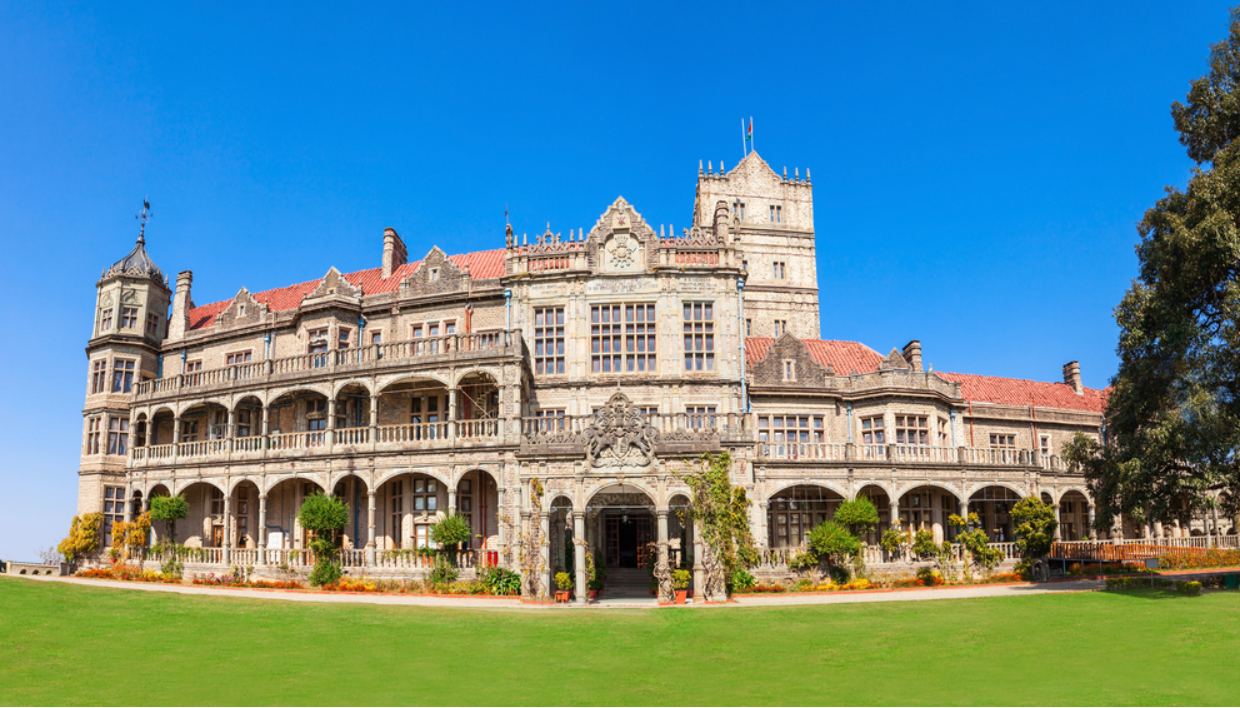
  • A Triumph of Architecture: The Indian Institute of Advanced Studies(IIAS)

    A Triumph of Architecture: The Indian Institute of Advanced Studies(IIAS)

    The magnificent structure displayed Rani Mukherjee’s (Michelle in the film) college in Black. Here, several other Black movie sequences were filmed. Superstars like Amitabh Bachchan and Rani Mukherjee appeared in Sanjay Leela Bhansali’s film Black, directed by him.

    Additionally, it is the ideal delight for photographers and photo enthusiasts, who frequently come here to capture the Indian Institute of Advanced Studies’ most spectacular natural splendors. With a historical building surrounded by an incredible garden in a spotless setting with ideal solitude, calm, and peace. It offers tourists unique experiences, enticing them to return time and time.

    The Evolution of Advanced Studies Shimla

    Advanced Study Shimla is the most striking illustration of India’s expanding tendency for research and growth in the humanities, natural sciences, art, and culture. It uses an interdisciplinary approach or erases all barriers between various knowledge domains.

    Advanced Studies the establishment of Shimla was the vision of Pt. Jawaharlal Nehru, our Prime Minister, and Professor Servapalli Radhakrishnan, our country’s second president. As a result, IIAS Shimla came into operation on October 20, 1965.

  • To bring humanity as a whole together.
  • Establishing ties of friendship and peace between them.
  • Dr Radhakrishnan said we should not be prisoners of the existing quo, underlining and respecting India’s unity in diversity.
  • So, Shimla, Himachal Pradesh’s “Institute of Advanced Studies”, attempts to bind people together through education and intellectual exchange. Before India gained its independence in 1947, the “Indian Institute of Advanced Study (IIAS)” was based in the opulent and regal structure known as the “Viceregal Lodge.” The Honorable President of India spent a few summers before 1964 living at “Rashtrapati Nivas.”

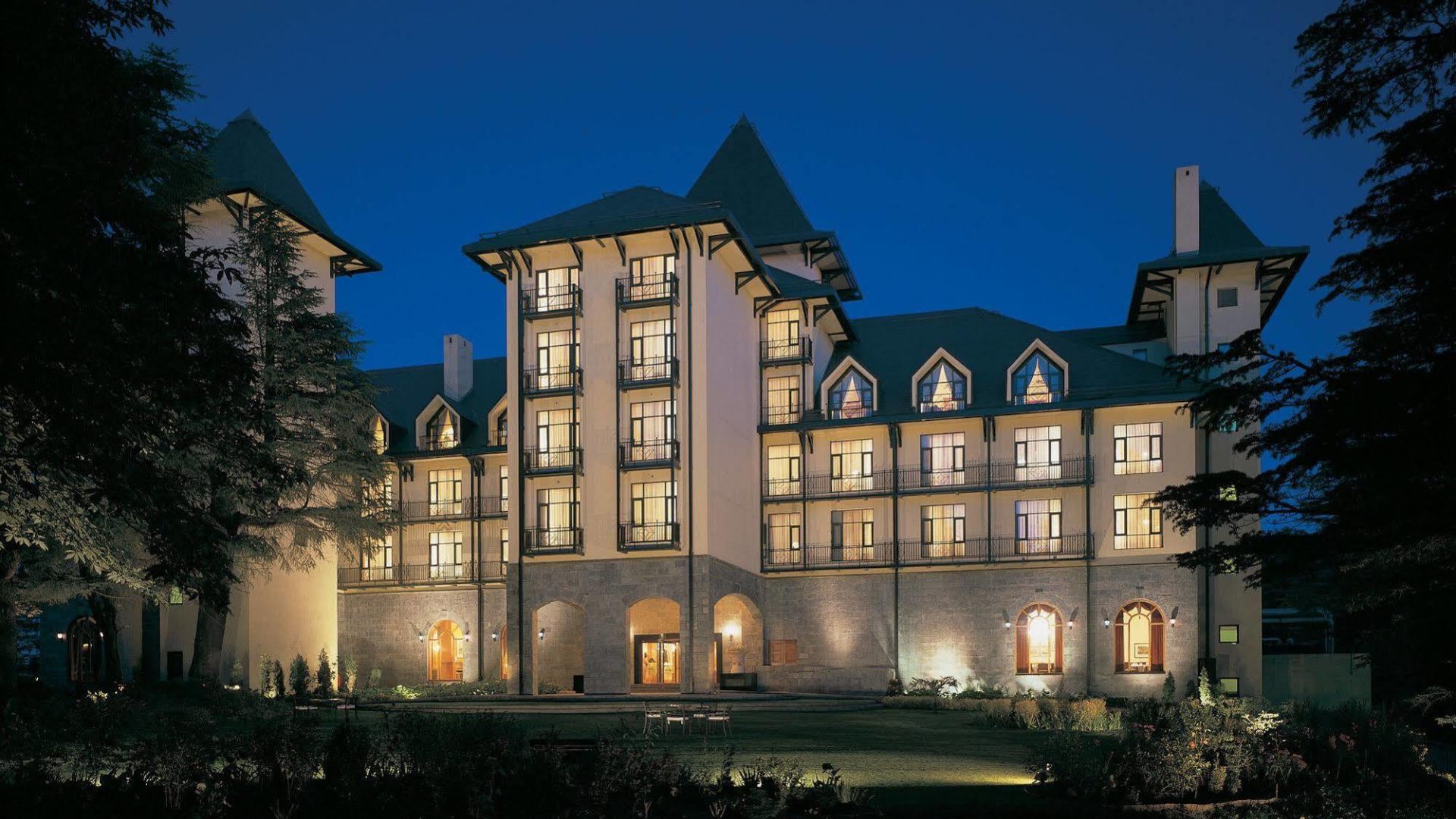
    Henry Irwin, an architect, created the IIAS building, whose architecture is a representation of the European Renaissance. Between 1884 and 1888, the Indian Institute of Advanced Study in Shimla was constructed with the help of “Viceroy Lord Dufferin.” The “Indian Institute of Advanced Studies” is a well-known landmark in Shimla and is extremely valuable from a tourism perspective.

    Advanced Study Shimla actively organizes twice-per-hour trips inside the “Rashtrapati Niwas.” The first tour begins at 10 AM, while the last tour starts at 4:50 PM. Only 40 individuals can tour the building in a group, and the tour is supervised by a qualified guide who is well-versed in its history.

    Every Monday, Advanced Study Shimla is closed to tourists and other outsiders, but it is open from 8 AM to 6 PM on other days. Indian Institute of Advanced Study Shimla has a relatively low entrance fee.

    Significantly, IIAS emerged as a primary consideration in several key political events that determined the fate of millions of people living on the Indian subcontinent. Shimla Conference (1945), Cabinet Mission (1946), and the eventual partition plan for India are only a few examples of such political events.

    What Makes It one of the Most Innovative Structures from the British Era?

    Due to the several contemporary characteristics, it has that were installed back then, IIAS is regarded as a cutting-edge work of engineering:

    It had a complex fire suppression system using water ducts with wax tips. In 1888, this was Shimla’s first structure to receive electricity. Steam engines that were exclusively imported from Britain were used to generate energy at the time for this building.

    When the building was constructed, a sizable water tank was buried beneath the front lawn as part of a rainwater collection system. The water tank receives the building’s rainwater, which slowly sinks into the earth.

    The King of Nepal a while back gifted an eight-metal bell that was installed in the building for visitors in April 2010.

    Also Read – https://himachal.blog/best-hotels-to-stay-in-shimla/

    Advanced Studies Fellowship

    The fellowship programs at the Advanced Studies Shimla are separated into two categories: “National fellows” and “Fellows.”

  • National Fellowships are given to outstanding academics in their particular fields and are only granted for a maximum of two years.
  • Most scholars are “fellows,” and their terms might last from six months to two years. Naturally, IIAS Fellows only study topics approved by the organization. The men interact with one another in both formal and informal settings in this way.
  • Thus, IIAS supports an interdisciplinary approach to solving every issue that the current world faces.
  • In addition to the National Fellows and Fellows, the Indian Institute of Advanced Study, Shimla, supports three other types of scholars:

  • Visiting Professor.
  • Visiting Intellectuals.
  • Guest scholars.
  • Different terms and conditions apply to each of these three categories.

    The Global Center of Human Development

    On August 19, 2013, the IC4HD at IIAS was officially opened in Shimla. This center’s proposed mission is to advance policy discussion on human development in the Global South. And the other is to put human development research into practice. This center’s seamless expansion was made possible by cooperation between IIAS Shimla, the Indian government’s ministry of HRD, and the United Nations Development Program.

    The Tagore Center

    The Tagore Center was also given to the Indian Institute of Advanced Study (IIAS). On the 150th anniversary of Rabindranath Tagore, the HRD ministry of the Government of India named it to study culture and civilization. Four “Tagore Fellows” are chosen each year by IIAS to work on Tagore’s ideas and concerns for the advancement of humanity.

  • 10 Places to visit in Chail for the Ultimate Hill Town Getaway

    10 Places to visit in Chail for the Ultimate Hill Town Getaway

    There are many wonderful experiences you may have at the well-known attractions to see in Chail. This includes dining at a lake restaurant and listening to birds singing in the Chail Wildlife Sanctuary. The top places to visit in Chail are listed here; if you consider visiting soon, take advantage of them!

    Ideal Season to Visit Chail

    Are you trying to determine when to travel to Chail? So, your search can end here. But first, we specify the time of year that would be ideal for traveling there:

  • Summer (late March to mid-June) is the ideal season to visit Chail. To escape the oppressive heat, a lot of tourists come here. Since Chail’s weather remains pleasant, visitors may relax and take in the views.
  • Fall (September to November): Autumn is a great season to explore Chail. You’ll discover fewer tourists along with the pleasant climate, resulting in cheaper hotel rates.
  • Winter (December to March midpoint) – Snowfall is seasonal in Chail. If you want to spend time in the snow, now is the time to do it. But prepare for the weather by wearing warm wool clothing!
  • Note: Chail receives moderate to heavy rainfall from June end to August during the monsoon season. Chail should not be visited when there is a chance of landslides, which occurs regularly.

    Leisure Places to Visit in Chail

    1. Sadhupul Lake Among the top places to visit in Chail is Sadhupul Lake. The lake restaurant, which serves munchies such as Maggi and bread-omelet, is the town’s attraction. Enjoy the cool lake water, brisk air, and beautiful green surroundings while munching on your favorite snacks and drinks. You won’t be let down by whatever this lake offers, and you’ll have fun here. 2. Maharaja’s Palace This palace is situated atop Chail’s Rajgarh hill and was built in 1891. This palace, which is well-furnished and has royal furnishings, is also known as the Rajgarh palace. Deep woodland, green gardens, log houses, and cottages surround the palace. Around the palace are a lover’s hill and a children’s park. This is one of the most well-liked tourist destinations in Chail. 3. School Playground The number one attraction in Chail is the school playground. Maharaja Bhupinder Singh, a devoted cricket fan, had made this little town his vacation residence. So this cricket field, the highest in the world and at 7500 feet, was built under his supervision. Being a part of the cantonment area, the terrain is managed by Army personnel. Tourists are welcome to stroll around and take photos, but they must stay inside the cemetery.

    4. Chail Palace Hotel The Maharaja of Patiala was the owner of Chail Palace, which was built in 1891. It has become among the popular tourist destinations in Chail ever since it was transformed into a heritage hotel. The traditional furniture and historical décor bring to mind the royal way of life in the past. Although Chail has many cottages, this one is the finest choice for a comfortable yet elegant staycation. If you don’t want to stay, you can still take a quick tour of the palace. What makes it unique: The Cafe Palace is an outdoor dining area where you can enjoy delicious food and the splendor of pure nature.

    Holy Places to Visit in Chail

    Chail has many homes of worship that you can visit. In addition, there are numerous places to pray, including Kali Mandir and Siddh Baba ka Mandir. Also, see some of Chail’s most breathtaking tourist attractions below: 5. Siddh Baba Ka Mandir The Siddh Baba Ka Mandir, devoted to Saint Siddh Baba, is another well-known tourist spot in Chail. According to mythology, he told Maharaja Bhupinder Singh in his vision, where he meditated. His dream influenced the king’s decision to authorize the temple’s construction. Be mindful of Chail’s traditions and customs, and observe any instructions displayed outside the temple, such as taking off your shoes before entering, before the tranquility of the location overcomes you. 6. Kali Ka Tibba The Kali Temple, also known as Kali Ka Tibba, is situated right on the pinnacle of a hill. Apart from a few trees, the shrine has nothing at all in its vicinity. Among the most stunning sights in Chail, the temple is well-known for its breathtaking vistas. In addition, it offers a variety of activities like horseback riding and fishing. 7. Gurudwara Sahib Chail Gurudwara is unique in that it resembles a church. It was constructed in 1907 but began to deteriorate before being renovated by a non-profit organization called Chail Heritage Foundation. When Sikh holidays like Gurupurab and Baisakhi are in season, Chail Gurudwara, one of the city’s most well-known and popular religious sites, becomes quite appealing. It is a beautiful spot for prayer and provides free lodging for guests in its guest rooms and dormitory.

    Adventurous Places to Visit In Chail

    Chail offers a wide variety of adventurous destinations. There are countless options, such as visiting the Chail Wildlife Sanctuary or the Himalayan Nature Park. Here are some of Chail’s most amazing and adventurous attractions:

    You can also read – https://himachal.blog/tara-devi-temple/ 8. Himalayan Nature Park The Himalayan Nature Park in Kufri is one of the top sites to see animals near Chail. You can see wildlife here, including deer, black bears, Tibetan wolves, leopard cats, and cheer pheasants. Shopaholics can also bring home items made of wood and buy handlooms from the neighborhood. Bring a tour guide with you if you need help getting around this place. You and your beloved ones will have a great time here. It is among the top destinations on the Chail Shimla itinerary. Ticket Price: Adults pay INR 20 per person, while minors pay INR 10 per person. 9. Chail Wildlife Sanctuary The Chail Wildlife Sanctuary is definitely among the best places to visit in Chail for nature lovers. It offers stunningly beautiful views from its perch at 7152 feet, along with sights of the colorful birds and animals that consider the vicinity home. This is one of Himachal Pradesh’s most well-known wildlife sanctuaries. The Himalayan Black Bear, Wild Boar, Flying Squirrel, and Goral are just a few of the wildlife that may be seen in Chail Wildlife Sanctuary. Ticket Price: Free 10. Gaura and Jhajja Are you a thrill seeker? If so, you’ll like hiking around Gaura’s and Jhajja’s stony trails. Enjoy the cold, peaceful mountain air as you stroll among towering pine trees. There are several fantastic points of reference from which you can take in the pure beauty of nature. Beginning with Chail, continue trekking to Gaura and Jhajja. Ticket Price: Free

  • Tara Devi Temple – For Those Seeking Serenity

    Tara Devi Temple – For Those Seeking Serenity

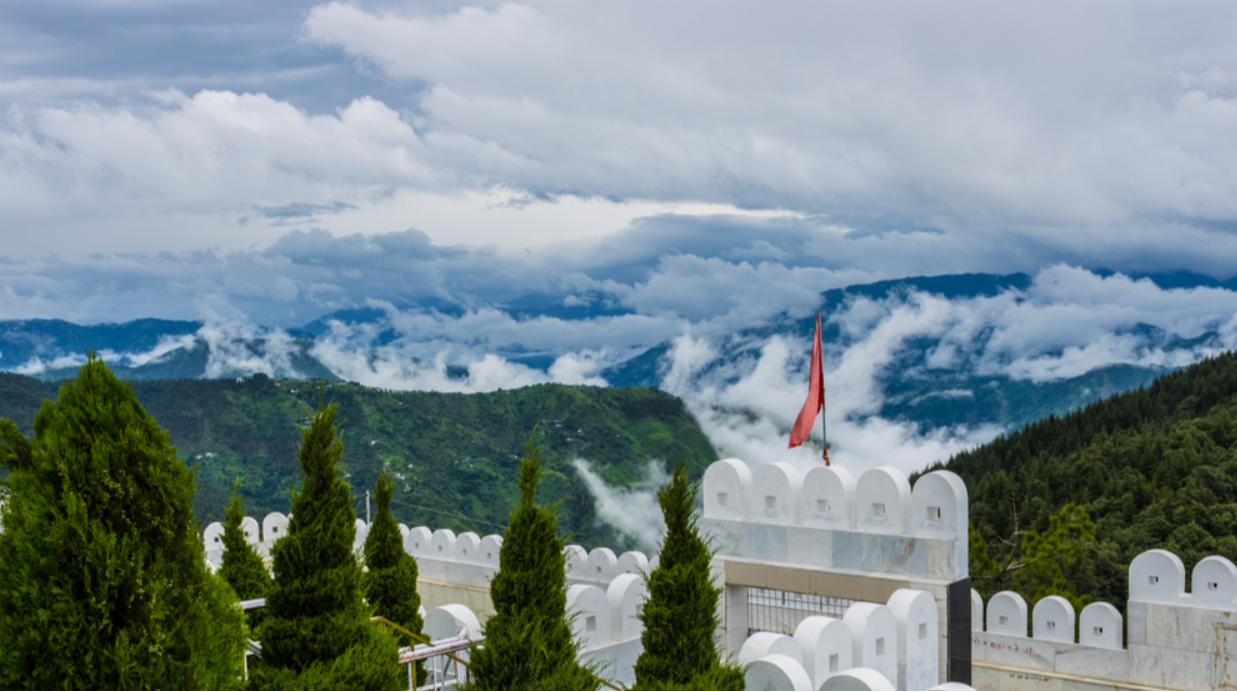
    Tall, lush pine trees encircle the Tara Devi Temple, and the area is incredibly green. Every soul is calm, and the body and mind are revived by the refreshing breeze blowing there. Shutterbugs and photo addicts will find the neighboring steep mountains and deep valleys surrounding the temple to be the ideal backdrop.

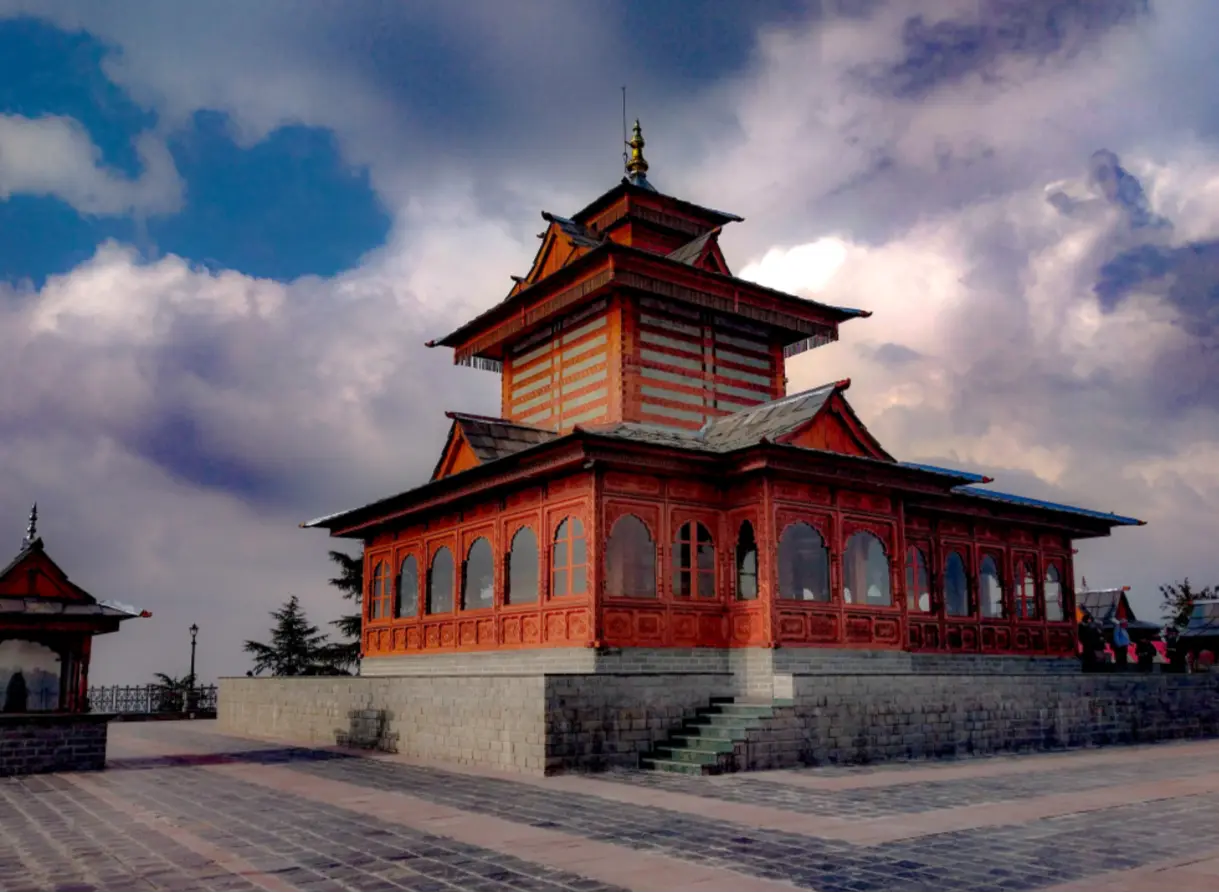
    The Tara Devi temple is in view as the manifestation of Goddess Kali. According to an ancient myth, she arrived from Bengal. She came to settle here and bestow her blessings on anyone who comes to worship her in all of her grandeur. The temple was distinguished by its wooden construction, lovely carvings, and breathtaking decorations carved on its wooden blocks.

    The temple has a lot to offer everyone, from lovers of nature to those seeking serenity, from solace to freedom. People looking for peace and harmony frequently come here to soak up the temple’s natural atmosphere and let go of their attachments to the outside world.

    What is the Significance of the Temple of Tara Devi?

    The Tara Devi Temple has existed for at least 250 years. A long-standing myth holds that the Sen dynasty transported the Goddess Tara from West Bengal to Himachal Pradesh. A Sen dynasty monarch once traveled to Bengal and returned with a little gold locket containing an image of Goddess Tara. He once wore a locket on his upper arm. The locket was passed from one generation to another. Maharaja Bhupendra Sen encountered an odd incident in his 96th generation. He had a vision of Goddess Tara, and Lord Hanuman told him to make the Goddess Tara visible. It was so they might pray to her and worship her to receive her blessings.

    You can also read – https://himachal.blog/christmas-celebration-in-himachal-pradesh/

    According to the protocols, the Maharaja created a big temple dedicated to the Goddess and placed a wooden statue of Goddess Tara. This was done for the public to revere and worship to receive her blessings.

    A few centuries later, TaravParvat’s peak was the focus of Maharaja Balbir Singh’s ambition when he had a vision of Goddess Tara. As a result, the Maharaja had her temple created on the top and placed a lovely Ashtdhatu deity (comprising eight rare elements). An enormous procession was used to set up the idol with much excitement. Then, the elephant Shankar was used to transport the Goddess idol to the peak. The Goddess initiated there following her wish to allow people to worship her and ask for her blessings. Since then, the temple has stood atop the hill in its magnificence and grandeur.

    Tara Devi Temple’s Adjoining Landscape

    The Tara Devi Temple is located distant from the crowds and traffic of the city, in the shadow of the majestic Himalayas. It is located at 6070 feet above sea level and is a singular phenomenon in and of itself. Oak, pine, rhododendron (also known as brass trees in the local language), and large meadows are all present in the area encircling Tara Devi Mandir.

    On the hilltop, the air is extremely clean, and there is very little noise, as if mother nature were revealing her magnificence to humanity. The afflicted humankind also seems to be receiving a healing touch from Goddess Tara Devi in the form of mother nature.

    Where is Tara Devi Temple Located?

    Near Tara Devi railway station, the Tara Devi temple is situated atop Tarav Hill along the Kalka-Shimla national route. Shimla and Tara Devi Temple are separated by about 11 kilometers.

    How to Get to Tara Devi Temple

    Getting to the shrine at the peak of Tara Devi hill is extremely touching and exciting. It would be best if you went 4 kilometers on foot from Tara Devi Station to get to the temple. Shimla city and the snow-covered mountain peaks on the north side may be seen from the hilltop. Similarly, its southern view displays miles and miles of luscious grasslands.

    In addition, taxis and buses run from Shoghi and Shimla to the Tara Devi temple. They drive the visitors to a location only about 200 meters from the Tara Devi shrine.

    Tara Devi Mandir Festivities

    It is worthwhile to visit Tara Devi

    Mandir during Durga Ashtami and the Dussehra festival. The temple organizes a large feast fairly attended by thousands of mother deity worshippers. These fairs and feasts are organized on such occasions in honor of the Goddess mother, Tara.

    It is challenging to go to the Tara Devi temple in July through August and December through January because of the rain and snow. Otherwise, the rest of the year is ideal from a tourism perspective. The Tara Devi Temple is open daily from 7:00 am to 6:00 pm.

    Conclusion

    No experience compares to visiting Tara Devi Temple, whether you are a nature enthusiast, a peace seeker, or a devout person at heart. It is the ideal tourist place to revitalize one’s spirit, body, and mind. No matter what faith you practice, everyone can enjoy the environment’s peaceful surroundings and grand aura.

    The environment around the temple is a fantastic paradise to take in the breathtaking panoramic views and stunning natural sceneries. However, exploring it with your partner, family, or friends is preferable since you won’t find a place as lovely with cool weather and a peaceful atmosphere anywhere else.

  • 5 Incredible Places for Christmas Celebration In Himachal Pradesh

    5 Incredible Places for Christmas Celebration In Himachal Pradesh

    Reading the Bible, decorating the halls, putting up Christmas trees, gathering with friends and family, giving gifts, and waiting for Santa Claus are all common Christmas celebrations in India and worldwide. Many begin creating Christmas decorations well in advance by adorning their homes with lights and Christmas symbols like bells, wreaths, stars, candy canes, and candles. Continue reading to learn about the origins of Christmas and amazing places for Christmas celebrations in Himachal Pradesh. Christmas, observed on December 25 to honor the birth of Jesus Christ, whom many people believe to be the Son of God, is well known. The Christ Mass is where the word “Christmas” originated. But no one is aware of Jesus Christ’s actual birth date. This is because Christ’s birth wasn’t commemorated in any way during the first three centuries of Christianity. Christmas was originally observed on December 25, 336 AD, under the rule of Roman Emperor Constantine. However, the day of Jesus’ birth is not specified anywhere in the Bible. So you may wonder why we commemorate it on December 25. There are several reasons why the Christmas celebration is done on December 25. According to a well-known Christian myth, Mary was informed that she would give birth to a special child on March 25. December 25 comes nine months after March 25. Thus, December 25 was the day to honor the Christmas feast. However, church officials chose December 25 to celebrate Christmas to align it with already-existing paganism celebrations honoring Satan and Mithra. Mithra was the Persian God of light, and Satan was the Roman God of Agriculture. As a result, it became simpler to persuade the Romans to recognize Christianity as the imperial religion. The joy and enthusiasm with which Christmas is celebrated in India and worldwide encourages individuals to spend time with their loved ones and make enduring memories.

    Christmas Celebration Destinations in Himachal Pradesh.

    1. Manali

    While there are numerous downfalls to this popular winter vacation spot for honeymooners and travellers, there are also benefits. Manali’s foothills are blanketed in 14 inches of snow by December. Thousands of visitors from nearby states travel there for weekends every year because it is so approachable. Hotels decorate their gardens with beautiful Christmas trees and snowmen since the atmosphere at receptions and restaurants is joyful for Christmas celebrations. Christmas carols and traditional Himachal and Kullu folk music are played up to the night before Christmas when lavish celebrations are held with wine, bonfires, and dance. The celebrations often last until New Year’s Eve, after which tourists depart for picturesque locations like Shimla, Solang Valley, Parvati Valley, and others nearby for more snow. Best booking deals: https://www.airbnb.co.in/old-manali-india/stays

    2. Shimla

    Shimla is the city that celebrates the holiday spirit with the most enthusiasm each year. Another well-known destination for quick winter getaways (only a short drive from Chandigarh and Delhi), Shimla is famous for Christ Church, the second-oldest church in North India. A lovely Christmas celebration filled with carolers, songs, and a Christmas feast is held every year, lighting the world in a bar of bright gold. In addition, this church, situated on Shimla’s famed Ridge Road and offers beautiful views of the Himalayan Himalayas, has had a custom of ringing in the new year with a pipe organ for the past 116 years. There are numerous independent churches in this ice-covered town and five other well-known churches, all of which do a great job of capturing the joyful spirit of Jesus Christ’s birth. Don’t forget to stroll down Mall Road to find presents and unusual Christmas gifts; if the aroma of cakes, pastries, or sweet buns tempts you, follow your nose to one of the many bakeries in the neighborhood. Best booking deals: https://www.airbnb.co.in/shimla-india/stays

    3. Thanadar

    Compared to places like Manali and Shimla, this hillside town only gets mentioned a few times a week, which is advantageous. India’s apple, apricot, and plum orchards are concentrated at Thanadar, 17 km from Narkanda and off NH 22 from Shimla. It’s chilly, peaceful, and a fantastic destination for relaxing adventures and getaways in the great outdoors. A wonderful way to experience a white Christmas in Himachal is through hikes to frozen lakes and beautiful locations for breathtaking views. One of the oldest churches in India, St. Mary’s church is situated in Thanadar and was constructed in 1843. A church devoted to St. Mary, white apple orchards, apple and plum wine, and peace are all represented. Best booking deals: https://www.airbnb.co.in/thanadhar-india/stays

    4. Kufri

    Another well-known destination for Christmas celebration and seeing Christmas snow is Kufri in Himachal. The area is incredibly popular for skiing and offers beginner-friendly slopes as well. The ideal area to enjoy winter activities is here, but you should expect crowds because there is little quiet and tranquility. In the winter, it is constantly crowded with tourists. Best booking deals: https://www.airbnb.co.in/kufri-india/stays

    5. Khajjiar

    India’s very own Switzerland is Khajjiar, situated in Himachal Pradesh. Nothing will if that doesn’t tell you how beautiful and magical your Christmas can be. When you arrive at the small hamlet of Khajjiar, you will see a massive empty meadow covered with lush grass or snow, depending on the season. Mountains draped with pine trees and blanketed in snow encircle this meadow on all sides. You can see the snow-covered, arid heights of the fascinating Himalayas behind these mountains. Treehouses and little resorts with bonfires enhance the attractiveness of a coastal Christmas. Come here for a peaceful snowy Christmas celebration. To add a dash of adventure, try paragliding to see the valley. Best booking deals: https://www.airbnb.co.in/khajjiar-india/stays To know more about Himachal Pradesh visit https://himachal.blog/

  • Best Hotels to Stay in Shimla for your Luxury and Relieve of Travel

    Best Hotels to Stay in Shimla for your Luxury and Relieve of Travel

    Best Hotels to Stay in Shimla

    Suppose you want to experience luxurious amenities and a comfortable stay while exploring Shimla. You can choose the best hotels in Shimla from the list below for your upcoming trip. Here are some of Shimla’s most well-liked lodging choices for both luxury and budget-conscious tourists. Decide which:

    1. Hotel Willow Bank

    Hotel Willow Banks, a well-liked creation among the top hotels in Shimla, was built by Arthur James Craddock, sometimes known as “The Architect of Shimla.” In honor of its designer, it underwent a redesign. This hotel is exceptional because it combines historic architecture with modern conveniences while remaining within a reasonable price range. It is one of the top hotels because of this. Distance from the Mall: 0.4km What’s unique: The Hotel Willow Banks is conveniently situated. Lakkar Bazar, Jakhu Temple, outstanding food, and the rental car agency are all within a 10-minute walk of the mall. Recommended suite: Deluxe accommodations with city views on the third floor offer stunning views of the flaming hill after sunset. Price: INR 6,100 per night onwards Website: Not available Best Booking deal : https://www.makemytrip.com/

    2. Hotel Marina – A Memorable Stay

    One of the greatest Shimla luxury hotels, Hotel Marina, is just one kilometer from Mall Road and guarantees visitors the most breathtaking magnificent view of the lush green mountains with an equally lovely internal ambiance. Moreover, the stunning views of the lovely city make Hotel Marina one of the best hotels to stay in Shimla, whether it’s while eating lunch on the rooftop or watching the shimmering city lights at dusk from the window. Distance from the Mall: 1 km What’s unique: Hill’s Edge restaurant, which serves a range of local and foreign cuisine, and the M-spa, the greatest spa in Shimla, are all available for in-room dining. Recommended suite: Premium Deluxe rooms are the best option because they are roomy and provide the best hillside views. Price: INR 7,000 per night onwards Website : Not available Best Booking deal : https://www.yatra.com/

    3. Landmark – Amidst the Ranges

    The Hotel Landmark is yet another well-liked creation among the best hotels in Shimla. The Shivalik and Dhauladhar hills are stunning when viewed from Landmark’s balcony. The hotel’s lift offers direct access to the street leading to mall road and is just five minutes walk away. In reality, it is perfectly situated to easily access Mall road. Distance from the Mall: 0.5km What’s unique: Magnificent rooftop sunset views, a campfire option, and spectacular balconies-side views of the Shivalik and Dhauladhar ranges. Recommended suite: The clearest views are seen in the fourth-floor valley view accommodations. Price: INR 4,300 per night onwards Website: http://www.thelandmarkhotels.in/ Best Booking deal : https://www.goibibo.com/

    4. Combermere – The Core of Shimla

    One of Shimla’s best hotels, Hotel Combermere, is located in the town’s center and offers all contemporary conveniences while upholding the standard for luxurious accommodations. Being only 200 meters from Mall Road, it offers quick access to several tourist attractions. It ranks among the best hotels in Shimla on Mall Road due to its accessibility to the marketplace and modern amenities. Distance from the Mall: 0.2km What’s unique: The Seventh Heaven restaurant, Café Sol, which offers a wide selection of bakery goods, and the BARBECUE, which is well-known for sunbathing, are all conveniently situated and easy to access. Recommended suite: Choose one of the luxurious rooms on the 7th or 8th level for a full perspective of the city. Price: INR 6,100 per night on wards Website : http://www.hotelcombermere.com/ Best Booking deal : https://www.tripadvisor.in/

    5. Clarkes Hotel – A Historical Reminder

    This lodge is one of the best in Shimla since it has elements of the British way of life. One of Shimla’s top hotels is Willow Bank, a heritage grand category establishment close to Mall Road. Here, colonial architecture satisfies contemporary necessities, facilitating your stay and enhancing the aesthetic attractiveness of the city. Distance from the Mall: 0.8km What’s unique: The attentive service, colonial architecture, range of sporting opportunities (tennis, basketball, table tennis), closeness to the Viceroy building and other colonial-era landmarks. Recommended suite: Premier accommodations are larger and have a superior view. Price: INR 8,500 per night onwards Website : https://www.clarkesshimla.com/ Best Booking deal : https://bookety.com/

    6. Radisson Hotel – Dignity Of Shimla

    The Radisson hotel is located at the base of the Northwest Himalayas. This hotel’s elegance is beyond question because it is one of the best-equipped in Shimla and is conveniently located on Mall Road. Old-world architecture and contemporary design combine to make this gem one of the top 10 hotels in Shimla. Distance from the Mall: 1.5km What’s unique: Restaurant Café Valley Vue, wine at Pulse Terrasse Bar, spa, swimming pool, and various indoor sports, including a pool. Recommended suite: Executive room, for the lovely valley views from its balcony Price: INR 5,000 per night onwards Website : https://www.radissonhotels.com/en-us/hotels/radisson-shimla Best Booking deal : https://in.via.com/

    7. The Oberoi Cecil

    The Oberoi Cecil is one of Shimla’s oldest and most opulent 5-star resorts, with a distinctive British colonial style. During British administration, the hotel, currently the top choice for tourists in Shimla, was previously well-known for its ballroom dancing. It is situated on a quiet section of Mall Road and has a lounge and fireplace. This resort offers variety, from opulent suites to kids’ play areas, to meet every visitor’s needs. Distance from the Mall: 1.6km What’s unique: Personalized service, a 4-course hotel dinner featuring Himachali and foreign cuisine and a complimentary bottle of wine, as well as an indoor pool and spa with controlled temperatures Recommended suite: Deluxe luxury suites, so you can freely take in the valley’s expansive panorama from your private balcony. Price: INR 11,000 per night onwards Perks: Choose a room in the Cecil building compared to the Tudor wing. Website : https://www.oberoihotels.com/hotels-in-shimla-cecil/ Best Booking deal : https://www.wotif.com/ You may also need : https://himachal.blog/5-must-visit-hill-stations-in-himachal-pradesh/

    8. Snow Valley Resorts – Shimla’s Magnificence

    Snow Valley Resorts, one of Shimla’s largest and best hotels, is ideal for a magnificent stay with all contemporary conveniences. This hotel is well-known because of its beautiful indoor rooms and expansive views of the majestic mountains. It is one of the top 10 hotels in Shimla since it is conveniently located on NH 22 for all visitors to the city. Distance from the Mall: 5.3km What’s unique: Completely air-conditioned hotel, spa services, numerous indoor activities, and a disco. Recommended suite: From the balcony of a premium room facing a valley, guests can enjoy an amazing view. Price: INR 4,000 per night onwards Website:

    Shimla
    Best Booking deal: https://www.cleartrip.com/

    So why do you still wait? For a superb accommodation experience while touring Shimla’s most picturesque areas, get a room at one of these best hotels in Shimla on Mall Road. Examine the possibilities from the hotels mentioned above as you plan your upcoming visit to Shimla.

  • Shrikhand Mahadev Kailash: An Incredible Journey to Heaven

    Shrikhand Mahadev Kailash: An Incredible Journey to Heaven

    Ravan used to visit this location for Lord Shiva’s tribulation and would cut off his head as an offering, hence the name Shrikhand. Shiva eventually bestowed Ravan with the gift of immortality.

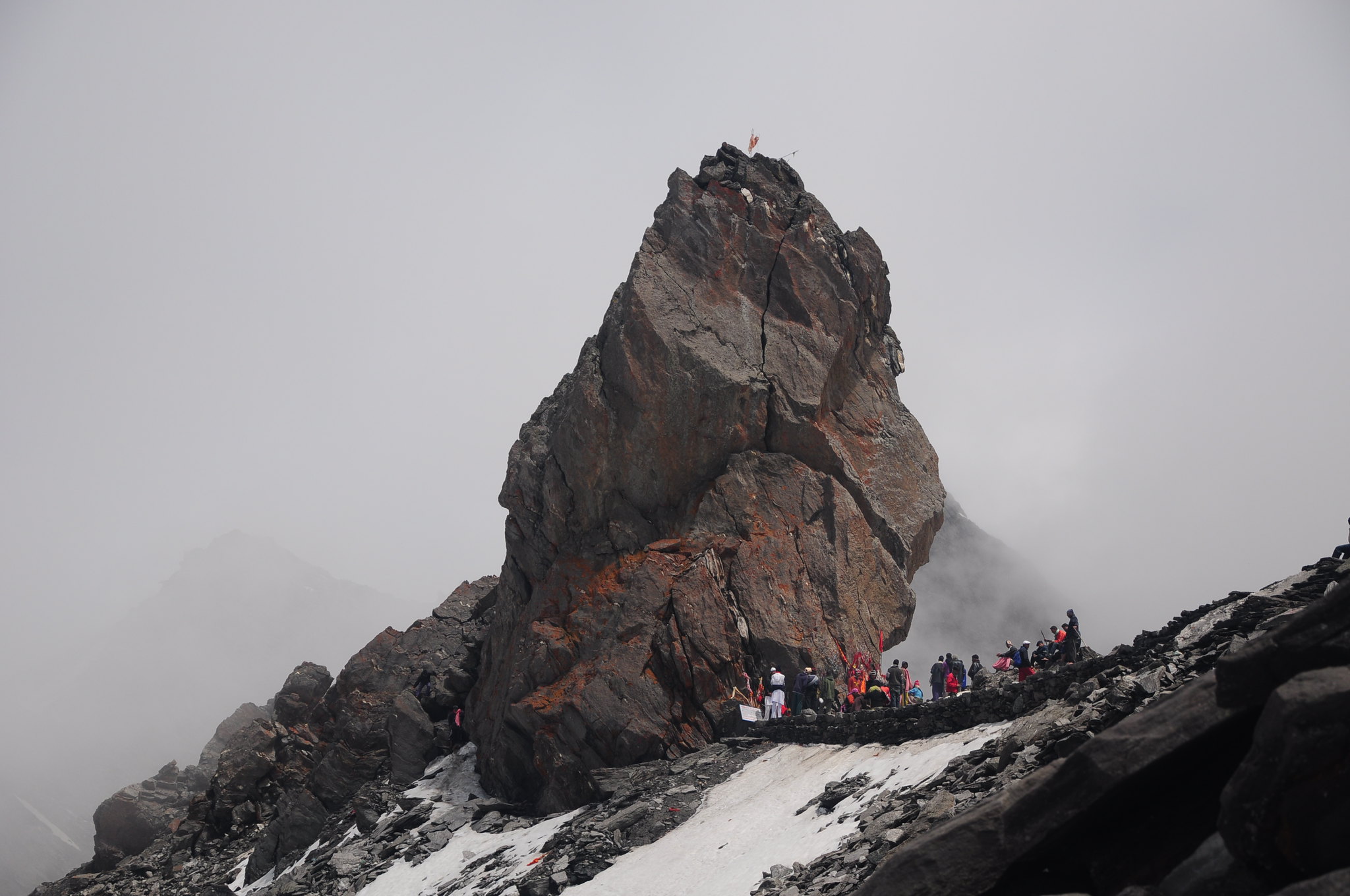
    Another legend claims that Bhasmasur, who had attempted to destroy Shiva, fled to the mountains via Devdhank and took samadhi in this huge boulder (aka Shivling). Shiva eventually emerged from here after Parvati, Ganesh, and Kartikeya underwent a great ordeal. Likewise, rock can be seen to have cracks.

    About the Yatra: Shrikhand Mahadev

    One of the five Panch Kailash yatras, the others being Kailash Mansarovar, Manimahesh, Kinnar Kailash, and Adi Kailash, is Shrikhand

    Mahadev. One of India’s most difficult shrines, Shrikhand Mahadev, is located in the Himachal Pradesh district of Kullu, between 16404-16864 ft above sea level.

    When you get to the peak, a Shivling-shaped rock that is naturally created and stands about 75 ft tall mesmerizes you. Breathtaking views of the Himalayan ranges, including those in the Parvati valley of Kullu, Kartik mountain, Jorkandan, the Rangrik ranges of Kinnaur, Kinnar Kailash, and other nearby peaks southeast of Sutlej, may be seen from the summit.

    According to the Hindu Vikram calendar, the Yatra typically starts on the Ashada Poornima or full moon day in June or July. The Shrikhand Mahadev trust and the Himachal Pradesh government organize a 15-day yatra together. The travelers are given every arrangement. Before the yatra starts, a medical examination and enrollment are completed.

    Mythology Regarding Shrikhand Mahadev

    For many years in the Himalayas, a demon named Bhasmasur

    used to worship Lord Shiva. Due to his dedication, Lord Shiva was impressed and demanded a boon from him. The demon pleaded with Shiva to grant him the ability to instantly reduce any living thing to ashes by putting his hand on its skull. He was encouraged by Lord Shiva to do as he wished (TATHASTUH).

    After receiving such a blessing, the demon became arrogant and attempted to make Lord Shiva his first victim. As soon as Lord Shiva saw what had happened, he disappeared and took refuge in the Deodhank cave near the town of Nirmand

    . Lord Vishnu, the universe’s protector, appeared to save Lord Shiva.

    Lord Vishnu approached the demon while posing as the lady Vishwamohini and began dancing in front of him. The demon became entranced by Vishwamohini’s beauty and began dancing in response to orders. In one motion, Vishwamohini

    instructed the demon to place one hand on her head and the other on her waist. The demon became mesmerized and behaved, which caused him to burn himself to ashes.

    All of the gods of the universe visited Devdhank

    immediately following the burning of Bhasmasur to see Lord Shiva. They discovered Lord Shiva imprisoned in a cave that was incredibly challenging to escape. But, as Shakti Swaroopa, Lord Shiva used his strength to emerge from the cave as Shrikhand

    Kailash. Devdhank was that cave.

    You can also read – https://himachal.blog/the-great-himalayan-national-park-manali/

    Trip Guide

    One of the world’s hardest and most challenging treks is the Shrikhand Mahadev Trek in the Himalayas. As you climb to Shrikhand Kailash, another name for Shrikhand Mahadev, you will constantly be accompanied by groups of stunning valleys and ravines. The hike passes through forests and glaciers, adding to the adventure and spying up the journey. Whereas the varied flora and fauna of the woodland paths enchant people’s eyes in the first half of the walk, the adventure-filled trek through the snow and glaciers casts spells on them in the second. The Himalayan Range’s ethereal beauty can be seen while trekking through Parvati Valley.

    The trek can be started from one of two paths. The one from the Jaon village side trek is generally favored because of the breathtaking views of the valleys and the priceless experience it offers. One starts from the Jaon village of Nirmand, and the other from the village of Arsu.

    How to Reach:

    By Air:

    The nearest airport is in Jubbarhatti

    , Shimla. The Jaon town of Nirmand, where the hike starts, is reachable further out through road transportation.

    By Rail:

    Shimla

    is once again home to the closest train station. The journey’s starting point, Jaon Village, is 170 km from Shimla and, as previously indicated, is reachable by road.

    By Road:

    A well-established bus network links Shimla

    with Jaon

    village, where the Shrikhand Mahadev yatra starts. It takes five hours to travel by car. In addition to the bus, there is also a taxi option from Shimla to Rampur (130 km), which travels to the village of Jaun through Nirmand

    (Kullu). However, the final 8 km from Bagipul to Jaon is on a stretch of kutcha road.

    The final village in the Kullu district with a road connection is Bathad in the Banjar Block. The Bashelu

    pass is located further up from Bathad on a very steep track. Thus getting there requires a stroll. This is the last place where buses or taxis would drop off passengers. Then it opens up to the lovely village of Saharan, from which it is once more possible to take cabs or taxis to Jaon, which is located 210 km away from Saharan. So the journey to Shrikhand Mahadev starts from Jaon.

    Shrikhand Mahadev Facts

    Best Time to Visit

    Even though the trip begins to see human activity in early March and lasts until late October, the best time to see large groups of pilgrims traveling these Himalayan trails is from June through August. Additionally, these months are ideal because of the ideal weather, which makes it a relatively safe experience.

    The expedition is typically planned according to the Hindu calendar, starting on the Ashada Poornima full moon day in July and ending on the full moon day in August (Shravana Poornima). The schedule fluctuates yearly depending on the weather forecast, but the dates commonly come between July 1 and July 15.

    Due to the enormous number of pilgrims that arrived during this time, the government also took additional safety precautions.

    Off-season trekking is not advised because, for the most part, the weather is unfavorable, making the activity more challenging and risky.

    Along with worshippers, this untamed region is also home to hikers, adventurers, and climbers who do not pass up the chance to see and feel its bizarre beauty.

    Difficulty Level of Shrikhand Mahadev Trek

    One of the most strenuous treks in the world is the Shrikhand Kailash Mahadev

    trip. The trek’s difficulty can be reasonably inferred from its passing through a dark forest and ferocious glaciers.

    The deep jungles start as soon as you pass Kurpan Khad from Barhati Nala. The journey to Shrikhand is fairly challenging because it is further from Nainser

    Lake and quite vertical. One challenge that demands a lot of stamina to overcome is the glacier-like first section of the lake. After that, the section followed is a route with moraines and occasional patches of snow.

    Additionally, in the “Bheem ki Sidhiyan

    ” or “Bheem’s Stairs

    ” stretch near the journey’s finish, one must navigate around the enormous stones strewn across the path to reach the magnificent view of the Shrikhand Mahadev. The oxygen

    shortage makes the trek much more difficult as the altitude rises. The severe weather encountered only a list of challenges. Despite the difficult terrain, the devotees’ unwavering faith prevents them from being deterred from their trek.
  • Masroor Temple: A Himachal Pradesh Rock-Cut Wonder

    Masroor Temple: A Himachal Pradesh Rock-Cut Wonder

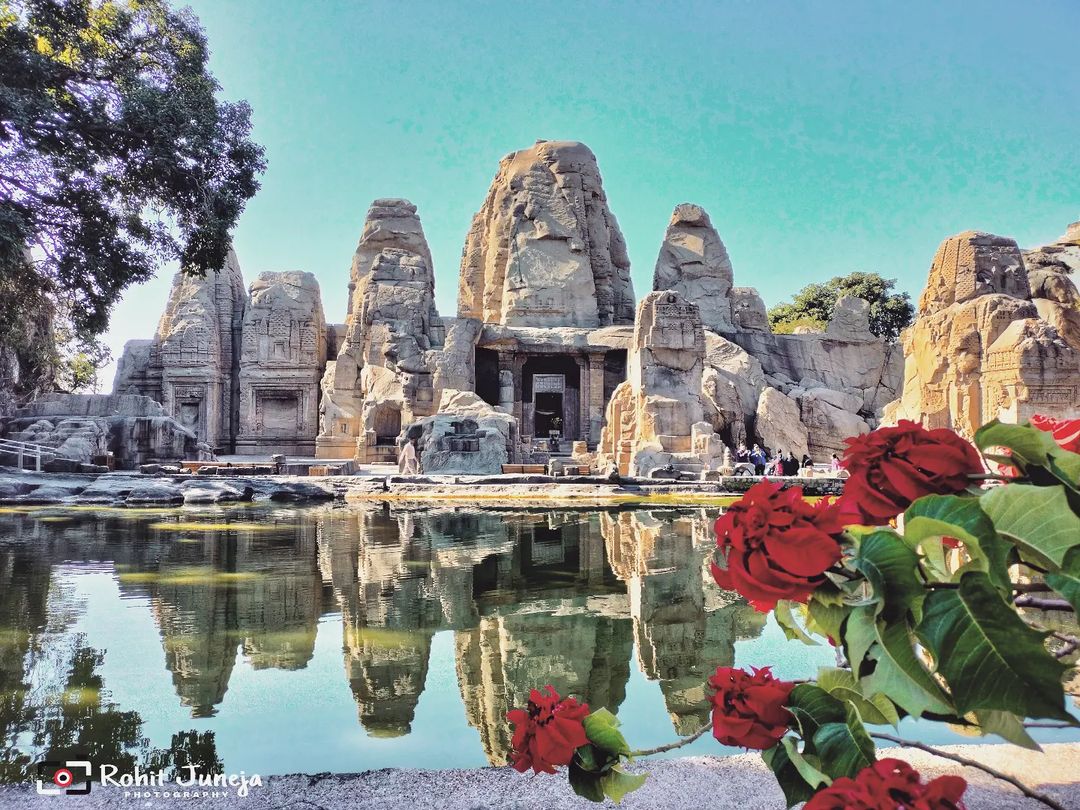
    “Monuments are the grappling-iron that bind one generation to another” – Joseph Joubert. In Himachal Pradesh’s Kangra region, the monolithic rock-cut cave temples of Masroor are one such example of an architectural treasure that has been conserved over the years and for future generations. It is a popular destination for visitors, travelers, and history buffs. It is also called the Ellora of Himachal and the Himalayan pyramid .

    One of northern India’s most mysterious and unique attractions is a single rock carved into 15 temples. But tragically, it is also one of the lesser popular tourist destinations in the Himachal Pradesh state. One well hill town that stands for harmony and morality is Dharamshala . The tranquility of this town is a reflection of the various compounds of art and culture that coexist and thrive side by side without any barriers. The Masroor Temple, a Rock-Cut Wonder in Kangra, Dharamshala, is at the top of this list of the spiritual locations that are inspiring people in Dharamshala and elsewhere. This is a complex of temples meticulously carved out of monolithic rock, as the name suggests. This temple is committed to Lord Shiva , the God of Gods. It is a notable Hindu pilgrimage site since it is thought to have been connected to the Mahabharata era of mythology. Thus, visitors from all over the globe come to this lovely cluster of temples to pray and be mesmerized by the exquisite architecture.

    History of Masroor Temple

    The Masroor Temple complex was built somewhere in the eighth or ninth century AD. According to local mythology, the Pandavas spent a significant amount of time at this temple compound during their exile. The existence of an incomplete stairway that was found inside the temple is mentioned in a legend. It is thought that the Pandavas built the staircase to get to heaven. Another popular theory holds that Raja Yashoverdhan , a fervent follower of Lord Shiva, built the temple.

    Travel Advice

  • You will need to walk uphill and downhill to and from the temple, so comfy shoes.
  • Carry appropriate attire, observe the laws and norms, and act by expectations.
  • Keep quiet on the temple grounds and refrain from attempting to enter any prohibited areas.
  • Inside the temple’s restricted areas, photography is not permitted. Watch for the manifestations, meanwhile.
  • Access to the Guides

    If you require a guide to go with you, you must book one by speaking with a travel agent in advance. In contrast, you can talk to the locals and priests there in their spare time to learn more fascinating facts about the Masroor Temple.

    Best Time to Visit

    It is advised that you try to go to the Masroor Temple during Shivaratri so that you can participate in the locals’ celebration. There was great fun at that time. However, visiting the temple during the monsoon season is also not advised due to the abrupt and catastrophic landslides in Himachal Pradesh due to the excessive rains.

    How to Get There

    From Dharamshala, the Masroor Temple: The Rock-Cut Wonder is 43 km away. You can hire a car or use a shared taxi to get to this historical temple.

    Nearby Landmarks

  • Tibet Museum
  • Kangra Valley
  • Chintpurni
  • Dal Lake
  • Dharamshala State Museum
  • Main Temple of H. H. Dalai Lama
  • Bhagsu Nag Temple
  • Nearby Restaurants

  • Lung Ta
  • Tibet Kitchen
  • Trek and Dine
  • Illiterati
  • Jimmy’s Italian Kitchen
  • Nick’s Italian Kitchen
  • Hindu pilgrims consider the Masroor Temple a significant shrine, and they come here frequently to submerge themselves in the ancient sanctity that emerges from these walls. Every traveler returns from a trip to this legendary location with a pure heart and the will to take on any challenges that life may throw their way. Everyone should pay a visit to this temple at least once in life. Read more blogs – https://himachal.blog/why-en-tour-to-spiti-valley/

  • The Great Himalayan National Park Manali

    The Great Himalayan National Park Manali

    Location & Terrain of The Great Himalayan National Park

    The Great Himalayan National Park is situated in Himachal Pradesh’s Seraj Forest Division, 60 km from Kullu. Great Himalayan National Park, which is encircled by the Rupi Bhaba Sanctuary, Pin Valley National Park, & Kanwar Wildlife Sanctuary, is nestled at an altitude of 1500–6000. This gives magnificent views of the mountains in its vicinity. A vast 754 sq km area creates up the national park. However, 256 square km of land were separated from the park in 1994 and designated as a buffer zone or ecozone. There are 160 villages in the Great Himalayan National Park’s ecozone.

    Let’s Talk about the Biodiversity of the Park

    Various vegetation, animals, and birds consider the park abode. The 375 fauna in the Great Himalayan National Park include mammals, reptiles, molluscs, insects, & birds. The Wildlife Protection Act of 1972 defends these creatures. Animal hunting and gaming are forbidden and are considered criminal offences.

    The Magnificent Flora of The Great Himalayan National Park

    Great Himalayan National Park attributes more than 100 plant varieties, including therapeutic herbs, specializing in Deodar and Oak trees. The list is wide and diverse, ranging from pine, chestnut, and spruces to junipers and mountain plants. Some alpine meadows have been cleared for grazing even at lower elevations.

    The Best Way to Reach the Himalayan National Park

    By Road: There are a few rough roads but no motorable roads that lead directly to the national park. You may get to the park gate from Kullu by either traveling from Gushaini to Ropa in the Tirthan Valley or from Ropa to Shangarh in the Sainj Valley. By Rail: The immediate railhead to the Great Himalayan National Park is Joginder Nagar, adjacent to Mandi and roughly 143 km away. Between Joginder Nagar and Chandigarh, frequent trains run. By Air: Bhuntar in Kullu is around 60 km from the Great Himalayan National Park and is the closest airport. From Delhi, there are frequent flights to this airport.

    The Best Duration to Visit this Place

    The best months to explore the Great Himalayan National Park in Himachal Pradesh are March, April, May, June, and mid-September, October, and November to enjoy the excellent weather and stunning flora and fauna. Throughout these months, treks are organized by the Himalayan Ecotourism team. Due to the brutally cold and snowy weather, visiting during the winter is not advised. During this season, only lower altitude treks are scheduled. Trekking in the national park is not advised during the monsoon season, which lasts from late July to early September.

    Activities to Discover in Great Himalayan National Park

    Trekking through the Great Himalayan National Park is quite well-liked by adventurers. In this park, there are four moderately tough trekking routes. Those are as follows:

  • Gushaini to Parvati Valley
  • Sainjh Valley
  • Sainj to 6 Meadows
  • Bird Watching
  • Trout Fishing
  • Entry Fee & Permit for This Place

    The Great Himalayan National Park only allows visitors with valid permits. The same must be obtained from the Shamshi head office and the Shairopa and Ropa zonal offices. For foreign tourists, the daily permit fee is INR 400, while it is INR 100 for visitors from India. Entrance fees for students are lowered. Indian students pay INR 50 per day, whereas international students pay INR 250 per day. For still and video cameras, there are additional fees.

    Accommodations Around & Within the Great Himalayan National Park

    Great Himalayan National Park’s vicinity does not include as many commercialized zones. Therefore, there aren’t many lodging options nearby to the ecological reserve. The cheapest accommodation options near the Great Himalayan National Park are the dormitories at Sairopa Tourist Center and Forest Rest House.

    Recommendations for Holidaymakers

  • Wear adequate hiking shoes because many of the trekking paths are extremely incline.
  • Make sure you are in good enough shape to undertake the trek.
  • Bring water, dry food, and any prescribed meds for your hike.
  • Ensure that you pick up the permit from the forest office.
  • Select a professional trekking guide.
  • Bring camping gear such as tents, sleeping bags, and basic cooking utensils.
  • There is little provision here. If you aspire to go during the summer, make early reservations to avoid crowds.
  • Facts & Figure of Great Himalayan National Park

  • The Great Himalayan range’s rocks were deposited in their original places between 19 and 21 million years ago.
  • The largest known population of western tragopans is discovered in the upper half of the forest zone of GHNP.
  • In GHNP, 832 plant species from 128 families and 427 genera have been identified.
  • The GHNP has 10% of all known plant species.
  • On June 23, 2014, the Great Himalayan National Park (GHNP) received the designation of UNESCO World Heritage Site.
  • Frequently Asked Questions

  • Why en Tour to Spiti Valley | Best Thing for Travelers

    Why en Tour to Spiti Valley | Best Thing for Travelers

    Why You Should Visit – All About Spiti Valley

    One of those areas cut off from the rest of the world is Spiti. This location is remote and surrounded by the highest peaks of the Himalayas. Therefore, it could take days or longer to travel there by vehicle. In addition, Spiti valley offers different terrain, a different culture, cuisine, atmosphere, etc.

    Best Things to do While Traveling to Spiti

    CAMP UNDER A STAR-SPLATTER Few places on earth allow you to lay on your back and completely take in the spectacular beauty of a starry sky. Spiti is a paradise for campers, especially because of its clean environment. Camping is advised from April to June when the snow has melted, but the weather is still cool, and the skies are clear. Dhankar Lake, Chandra-Tal, Komic Village, and the banks of the River Spiti are the greatest locations for camping overnight and observing the night sky. DIG INTO NAKO VILLAGE The best cultural experience in Spiti Valley is visiting Nako village, which is just one of the many things to do there. It enables you to engage with the community and experience life’s little pleasures. The locals here encourage an eco-friendly lifestyle and are unconcerned with worldly goods. For instance, trash cans are everywhere, and solar energy is used to generate electricity. Unfortunately, this village is close to the Tibetan border. Therefore you need a permit to enter or be anywhere near it. However, the town’s peace and stunning vista make the cost worthwhile. In a day, you may tour Nako village on foot.

    View this post on Instagram

    A post shared by Nako Village (@nakovillage_official)

    AROUND THE MANY BUDDHIST MONASTERIES, MEDITATE A tour of the valley would be incomplete without seeing the local monasteries. Namely, the Key monastery is set atop a tiny hill and offers stunning views of the Spiti river. The feeling of meditating in such a peaceful setting is soothing. Anyone would find it difficult to leave once they relax and give in to the vibe at such a place, especially in a basic setting like this. All visitors are welcome, and the monks always have something to serve. The Monks are selfie addicts, just like you. Any monk would rarely refuse to pose for you. ICE-COLD WATER RIVER RAFTING Spiti is a haven for those looking for adventure. One activity that you must attempt is water rafting. Imagine the exhilaration you would experience rafting down the Spiti and Pin rivers. You can observe beautiful panoramas of mountains, glaciers, and monasteries as you have a thrilling ride over the rapids themselves. activity The best part concerning this activity is that beginners may participate in it too while being guided by professionals, giving them an equal experience. The variety of adventure activities available in the Spiti valley may pleasantly surprise you if you’re looking for thrilling things to do. Manali is another location in Himachal Pradesh that is well-known for its rapids. GO TO CHANDRA-TAL BY BIKE OR TRAIL Due to its crescent shape, the word “Chandra” in Hindi denotes the moon. It is fascinating to see how the day’s color varies due to changes in the air and weather. People frequently choose to camp here despite it being a pleasant bike or trip. Suraj Tal or Dhankar Lake would be some excellent places to go hiking. The moderate treks listed below include the Pin Bhabha, Parang La, Kanamo Peak, and Pin Parvati Pass climbs, which take five to nine days to complete.

    You can visit this location as much as you like, and Spiti valley will always call you back. You will always miss it and want to return time and time to see this stunning location in all four seasons. In actuality, there is never a bad time to visit Spiti. Naturally, it depends on you and the time of year you’d like to visit this lovely valley. The area is covered in white snow and is quite cold in the winter, but in the summer, you can also glimpse some greenery despite being a former area. Whatever the time of year or the weather in the Spiti Valley, you can expect to find breathtaking views and a beautiful landscape there.